Condo Recertification and Exterior Cleaning: What Boards Should Know
The Intersection of SB 4-D Compliance and Exterior Maintenance
In the wake of Senate Bill 4-D, Florida condominium associations and cooperatives are facing unprecedented scrutiny regarding structural integrity. The "Milestone Inspection" requirement mandates that buildings three stories or higher undergo a formal architectural or engineering inspection once they reach 30 years of age (or 25 years if within three miles of the coastline). For boards, the challenge is not just the inspection itself, but ensuring the building envelope is prepared for a clear, accurate assessment.
Professional exterior cleaning is no longer just an aesthetic choice; it is a critical diagnostic step. A building covered in biological growth, atmospheric soot, or salt crusting can hide hairline fractures, spalling, and rebar oxidation that inspectors must document. By performing a high-volume, low-pressure wash prior to an inspection, boards provide engineers with a clean canvas, potentially avoiding costly re-inspections or missed structural red flags.
Identifying Concrete Spalling and Rebar Exposure through Cleaning
One of the primary objectives of the Milestone Inspection is to identify signs of "substantial structural deterioration." In South Florida’s high-chloride environment, the most common threat is concrete spalling. This occurs when the steel reinforcement (rebar) inside the concrete corrodes, expands, and causes the surrounding concrete to crack and break away.
During a professional cleaning cycle, our technicians utilize specific flow rates and chemical applications to strip away years of organic buildup. This process often reveals:
- Rust Staining: Bleeding rust on the surface of a balcony or structural column often indicates deep-seated rebar corrosion.
- Stress Cracks: Fine-line cracks that are obscured by mold (Aspergillus or Cladosporium) become visible once the biomass is chemically neutralized.
- Delamination: Surfaces that sound "hollow" or show bubbling paint are easier to flag once the surface dirt is removed.
By identifying these issues during a pre-inspection clean, boards can proactively consult with engineers rather than being surprised by a failing grade on a structural report.
Technical Standards for Large-Scale Condo Cleaning
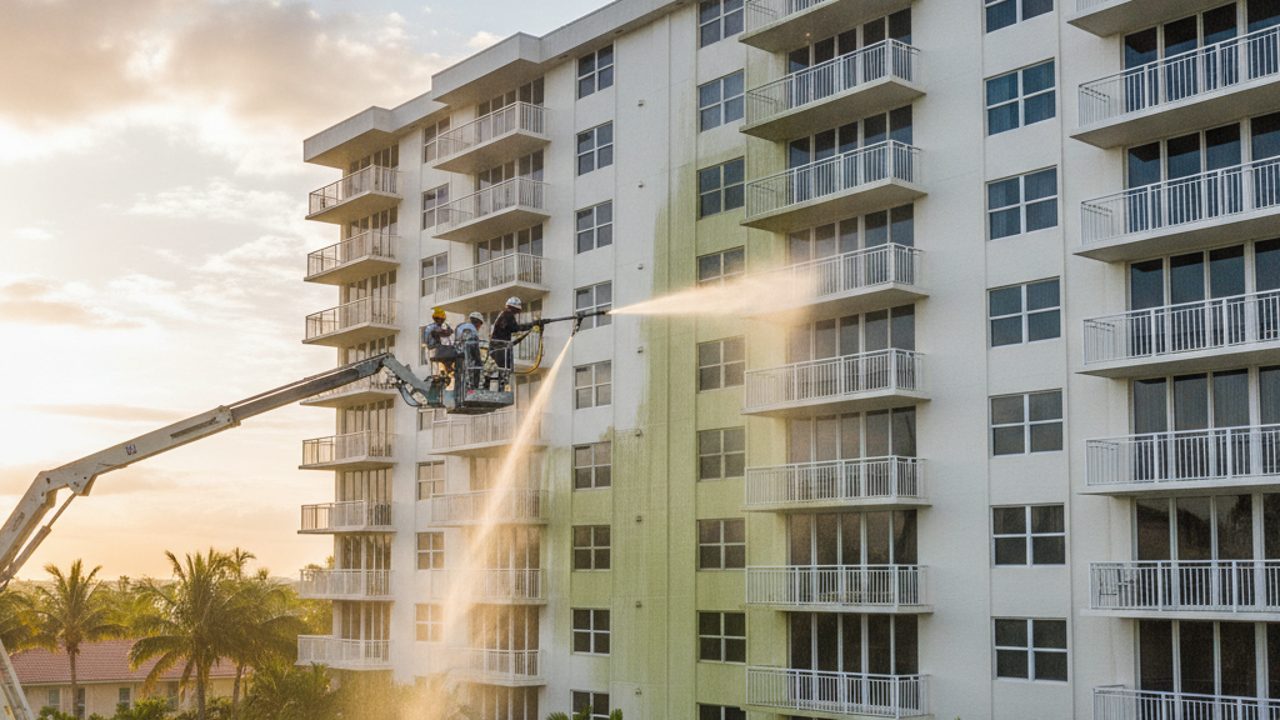
Cleaning a multi-story condominium requires a different technical approach than residential pressure washing. To protect the building’s integrity and the longevity of the paint, Power Washing And More adheres to strict technical protocols:
- Chemical Neutralization (Soft Washing): We utilize a sodium hypochlorite (SH) solution typically ranging from 1% to 3% depending on the severity of the organic growth. This is combined with professional-grade surfactants to ensure the solution clings to vertical surfaces, killing spores at the root without damaging the substrate.
- Pressure Regulation: High-pressure (4,000+ PSI) can force water behind the building's EIFS (Exterior Insulation and Finish System) or stucco, leading to internal mold issues. We prioritize "Soft Washing," utilizing high-volume (8-10 GPM) at low pressure (under 500 PSI) to rinse away debris.
- Water Recovery and Environmental Safety: In compliance with Florida’s environmental regulations, we manage runoff to prevent high concentrations of cleaning agents from entering local storm drains or harming tropical landscaping.
Preparation Checklist for Condo Boards
Before the engineering team arrives for a Milestone Inspection, boards should ensure the following maintenance steps are completed:
| Action Item | Technical Requirement | Benefit |
|---|---|---|
| Full Building Envelope Wash | Soft Wash (SH Solution) | Reveals cracks and spalling hidden by mold. |
| Expansion Joint Clearing | Low-Pressure Rinse | Ensures joints are clear of debris for movement testing. |
| Stairwell & Catwalk Degreasing | 200°F Hot Water + Degreaser | Removes slip hazards and allows for structural slab viewing. |
| Rust Removal | F9 BARC or Oxalic Acid | Distinguishes between surface rust and structural rebar bleed. |
| Drainage Verification | High-Volume Flush | Ensures scuppers and drains aren't contributing to ponding. |
The Financial Implications of Deferred Maintenance
Florida’s new mandatory reserve requirements mean that boards must be more diligent than ever with their budgets. Deferring exterior cleaning can lead to accelerated paint failure and increased water intrusion. When moisture penetrates the stucco, it reaches the concrete slab, accelerating the carbonation process that lowers the pH of the concrete and allows rebar to rust.
Investing in a comprehensive exterior cleaning program typically costs a fraction of a structural repair. For example, a full building wash might range from $0.10 to $0.30 per square foot depending on height and accessibility, whereas concrete restoration and rebar replacement can cost hundreds of dollars per square foot. Maintaining a clean building envelope extends the life of the paint by 2-3 years and provides the documentation needed to show the state that the building is being proactively managed.
FAQ: Cleaning and Milestone Inspections
Can pressure washing cause more damage to a building that is already aging?
If done incorrectly, yes. Using high PSI on aged stucco can cause "wand marks" or strip away the protective topcoat of the paint. This is why Power Washing And More utilizes the Soft Wash method, which relies on chemistry rather than mechanical force to clean the surface, ensuring the building’s structural skin remains intact.
How far in advance of an inspection should we schedule cleaning?
Ideally, the building should be cleaned 2 to 4 weeks before the Milestone Inspection. This allows the building to dry completely and gives the board time to perform a walk-through to note any obvious areas of concern that should be highlighted to the engineer.
Does exterior cleaning include the windows and balconies?
Yes. A comprehensive commercial cleaning should include the building face, balcony under-slabs (a frequent site of spalling), and window frames. Removing salt spray from window tracks and balcony railings is essential in coastal zones like Fort Lauderdale and Miami to prevent galvanic corrosion of the aluminum fixtures.
Will the cleaning chemicals harm our building's landscaping?
We use a pre-wetting and post-rinsing technique for all adjacent foliage. By saturating the plants with fresh water before and after the chemical application, we prevent the landscaping from absorbing the cleaning solution. We also utilize neutralizers where necessary to ensure the soil pH remains balanced.