How Often Should You Wash Your Fleet? A Guide by Vehicle Type
The South Florida Fleet Maintenance Reality
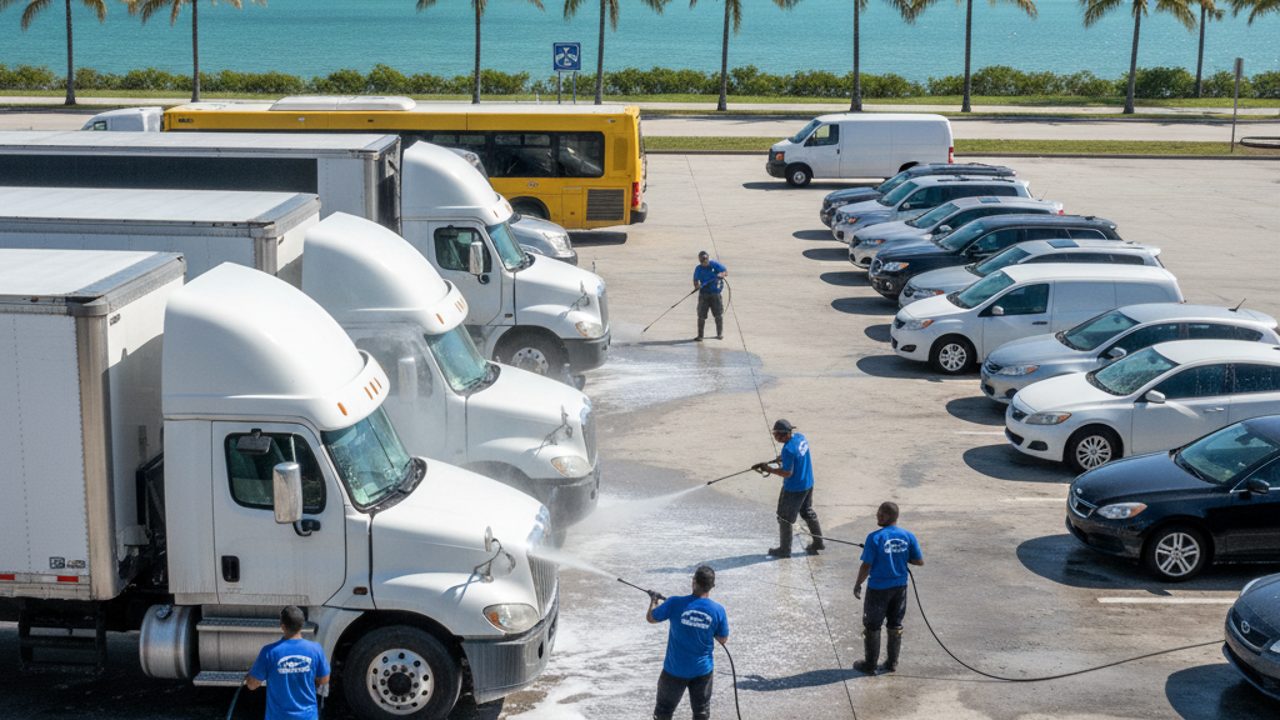
For commercial fleet operators in South Florida, vehicle maintenance extends far beyond engine diagnostics and tire rotations. The subtropical environment—characterized by high humidity, intense UV radiation, and constant salt air—creates a corrosive cocktail that aggressively attacks paint, seals, and aluminum components. At Power Washing And More, we specialize in high-pressure cleaning and chemical decontamination tailored to the specific needs of logistics companies, distributors, and delivery services.
Determining how often to wash your fleet is not a matter of aesthetics; it is a strategy for asset preservation. A build-up of road film, diesel soot, and salt spray doesn't just look unprofessional—it traps moisture against the chassis and facilitates electrochemical corrosion. To maximize the lifespan of your assets, you must align your washing schedule with the specific vehicle type and its daily duty cycle.
Box Trucks: Managing Aerodynamics and Visibility
Box trucks are the workhorses of the South Florida logistics chain. Because of their large, flat surface areas, they act as massive collectors for environmental contaminants. For companies running refrigerated units (reefers) or dry vans, the vertical surfaces are prone to 'black streaks' caused by the degradation of roof seals and atmospheric pollutants.
Recommended Frequency: Every 1 to 2 weeks.
Technically, box trucks require a two-step wash process to neutralize road film. We utilize a combination of low-pH and high-pH detergents to break the static bond that holds grime to the paint. If your trucks frequent construction sites or industrial zones in areas like Medley or Doral, a weekly schedule is mandatory to prevent concrete dust or iron filings from embedding into the clear coat. Neglecting the box's exterior can lead to premature oxidation of the aluminum skin, which is significantly more expensive to remediate than routine maintenance.
Last-Mile Delivery Vans: Brand Protection and UV Exposure
Delivery vans (Sprinters, Transits, and Promasters) represent your brand in residential neighborhoods from West Palm Beach down to Homestead. Because these vehicles operate in stop-and-go traffic, they accumulate a higher density of brake dust on the wheels and lower body panels. Brake dust is highly corrosive; if left unchecked, it will pit the wheels and permanently stain the paint.
Recommended Frequency: Weekly.
UV protection is the primary concern for vans. The Florida sun can cause rapid fading of vinyl wraps and decals. Our fleet washing process includes a specialized wax-infused soap or a post-wash sealant that provides a sacrificial layer against UV rays. Regular washing removes bird droppings and tree sap—common in residential routes—which contain acids that can etch into the paint within 48 hours in high heat.
Trailers and Flatbeds: Combatting Salt and Road Debris
Trailers, particularly those used for long-haul routes or port operations, endure the most severe conditions. The undercarriages are frequently exposed to salt-heavy air near PortMiami and Port Everglades. For flatbeds carrying heavy machinery or construction materials, the risk of hydraulic fluid leaks and grease accumulation is high.
Recommended Frequency: Bi-weekly or after every long-haul trip.
For trailers, we focus on high-volume rinsing (up to 8-10 GPM) at moderate pressures (2,000 to 3,000 PSI) to flush out the sub-frame and kingpin area. De-greasing the landing gear and rear impact guards is essential for passing DOT inspections. Aluminum trailers require periodic brightening using an acid-based cleaner to remove the dull gray oxide layer, restoring the original luster and ensuring reflective tape remains visible for safety compliance.
Technical Comparison: Washing Parameters by Vehicle Type
| Vehicle Type | Wash Frequency | Primary Contaminant | Focus Area |
|---|---|---|---|
| Box Truck | 7-14 Days | Road Film / Soot | Roof Lines & Rear Doors |
| Delivery Van | 7 Days | Brake Dust / UV Rays | Wheels & Vinyl Graphics |
| Semi-Trailer | 14 Days | Salt / Grease | Undercarriage & Sub-frame |
| Refrigerated Unit | 7 Days | Biologicals / Dirt | Condenser Coils & Seals |
The Role of Chemistry in Fleet Longevity
Professional fleet washing is not just about water pressure. In fact, excessive pressure can damage weather stripping and force water into sensitive electrical connectors. We utilize a 'chemical-first' approach. By applying a surfactant-rich soap, we encapsulate the dirt, allowing it to be rinsed away with lower PSI.
In South Florida, we often deal with high mineral content in the water. Without proper water softening or a spot-free rinse (deionized water), the sun will bake calcium and magnesium deposits onto your fleet, creating unsightly water spots that are difficult to remove. Power Washing And More ensures that the effluent from our cleaning process is managed according to local environmental regulations, preventing oily runoff from entering South Florida’s sensitive storm drain systems.
FAQ: Fleet Washing Essentials
How does salt air affect my fleet's washing schedule?
If your facility is located within 5 miles of the coast, your vehicles are constantly exposed to airborne salt. This accelerates the oxidation of aluminum and the rusting of steel components. In these coastal zones, we recommend a minimum weekly rinse to neutralize the salt, even if the vehicle does not appear visually 'dirty.'
Can frequent pressure washing damage my vehicle's decals or wraps?
When performed by professionals, no. We adjust our nozzles to a wider fan pattern and reduce PSI when cleaning near graphics. Using the right chemical pre-treatment reduces the need for aggressive high-pressure agitation, which is what typically causes vinyl edges to lift.
Why is undercarriage cleaning specifically important in Florida?
While we don't deal with road salt from snow, our coastal environment and heavy summer rains splash sand, salt, and organic debris into the chassis. This debris holds moisture against the metal. Regular undercarriage flushes are the most cost-effective way to prevent frame rot and ensure the longevity of your brake lines and suspension components.
Does fleet washing help with DOT inspections?
Absolutely. A clean vehicle is a signal to DOT inspectors that the fleet is well-maintained. It allows for easier visual inspection of welds, air lines, and fluid levels. Conversely, a vehicle covered in grease and road grime is more likely to be flagged for a closer, more time-consuming inspection.