Gas Station Canopy and Fuel Pad Cleaning
The High Stakes of Gas Station Exterior Maintenance
For commercial property managers and fueling station owners in South Florida, the exterior appearance of a facility is a direct indicator of safety and operational standards. However, cleaning a gas station involves far more than aesthetics. The combination of high-traffic fuel pads and towering overhead canopies presents unique challenges, including hydrocarbon accumulation, atmospheric soot, and stringent environmental regulations.
Power Washing And More specializes in industrial-grade sanitation for retail petroleum sites, focusing on the removal of stubborn petroleum distillates and the preservation of canopy structural integrity. In Florida’s humid climate, failing to maintain these surfaces leads to accelerated oxidation of canopy paint and dangerous, slippery buildup on fuel pads that increases liability risks.
Industrial Hot Water Extraction for Fuel Pads
Cold water pressure washing is fundamentally ineffective for fuel pad maintenance. Hydrocarbons—specifically motor oil, diesel spills, and grease—bind to the porous concrete surface. To break these molecular bonds, we utilize industrial burners that heat water to temperatures between 180°F and 200°F.
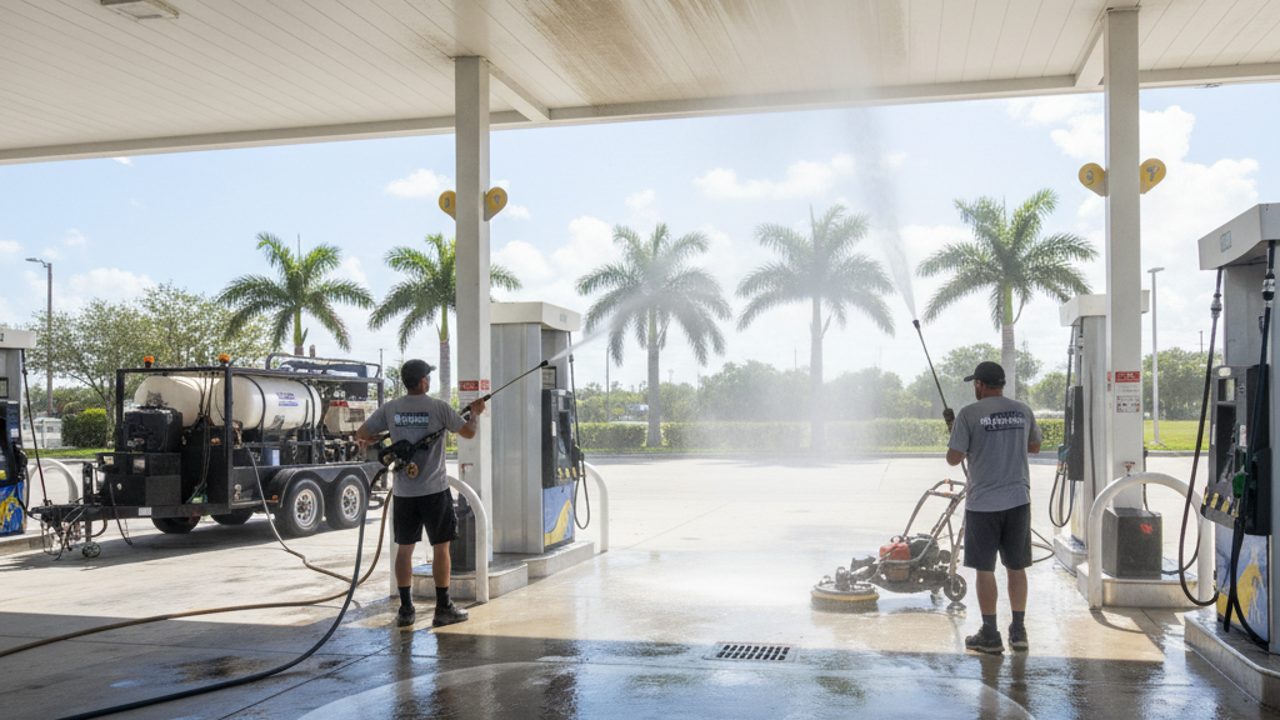
When water at these temperatures is delivered at 3,500 to 4,000 PSI through a rotary surface cleaner, it emulsifies the oils, lifting them from the pores of the concrete. This process is supplemented by professional-grade degreasers that are pH-balanced to ensure they do not damage the concrete matrix while effectively neutralizing oil-based contaminants.
EPA Compliance and Wastewater Reclamation
The Clean Water Act and local Florida municipal codes strictly prohibit the discharge of oily wastewater into storm drains. During a fuel pad cleaning, the resulting runoff contains heavy metals and petroleum hydrocarbons. Power Washing And More employs a closed-loop reclamation system to remain compliant.
We utilize vacuum booms and sandbags to divert all wastewater to a central recovery point. A high-powered vacuum system then extracts the effluent into a holding tank for off-site disposal or on-site filtration. Failure to implement these reclamation protocols can result in five-figure fines from the EPA or the Florida Department of Environmental Protection (FDEP). Our process ensures that your facility remains a “zero-discharge” site during the maintenance window.
Soft Washing the Overhead Canopy
While fuel pads require high pressure, the overhead canopy—often constructed of aluminum or ACM (Aluminum Composite Material)—requires a specialized touch. High pressure can force water into light fixtures, damage signage, or strip the protective powder coating.
We utilize a “soft wash” method for all canopy fascias and undersides. This involves a low-pressure application (under 500 PSI) of a specialized chemical solution consisting of 1-3% sodium hypochlorite and high-grade surfactants. This solution kills organic growth like mold and mildew—prevalent in South Florida—and breaks down the carbon-based soot emitted by vehicle exhaust. After a dwell time, the surface is rinsed with high-volume, low-pressure water, leaving a streak-free finish that preserves the life of the paint.
Technical Comparison: DIY vs. Professional Petroleum Cleaning
| Feature | Standard Pressure Washing | Power Washing And More Professional Service |
|---|---|---|
| Water Temp | Ambient (70°F - 80°F) | Industrial Hot Water (180°F - 200°F) |
| Pressure | Variable / Inconsistent | Regulated 4,000 PSI (Pads) / <500 PSI (Canopy) |
| Recovery | None (Runoff to Drains) | Full Vacuum Wastewater Reclamation |
| Chemistry | Consumer-grade Soap | Industrial Degreasers & Sodium Hypochlorite |
| Compliance | High Risk of Fines | EPA / FDEP Compliant Protocols |
Strategic Scheduling for Zero Downtime
We recognize that a gas station is a 24/7 revenue generator. Closing pumps during peak hours is not an option. Our commercial crews operate during “grave” shifts—typically between 11:00 PM and 5:00 AM—when vehicle counts are at their lowest. By segmenting the site, we can keep 50% of the pumps operational at all times, ensuring minimal impact on your daily revenue while maximizing the safety of our technicians and your customers.
Frequently Asked Questions
How often should fuel pads be professionally cleaned?
In high-traffic South Florida locations, we recommend a quarterly maintenance schedule. This prevents the buildup of “slick spots” that lead to slip-and-fall accidents and ensures that oil does not permanently stain the concrete beyond the point of restoration.
Can you remove old, set-in oil stains?
While we can significantly lighten any stain, “shadowing” may remain if the oil has sat for years and deeply penetrated the concrete. However, our hot water extraction and professional degreasers are the most effective method available for reaching the deepest possible clean.
Is your cleaning process safe for my electronic pumps?
Yes. We use specialized techniques to avoid direct high-pressure spray on sensitive electronic components, card readers, and nozzle assemblies. Our goal is to clean the environment around the equipment without risking electrical failure or water intrusion into the fuel sumps.