
Using Your HOA Reserve Study to Plan Exterior Cleaning
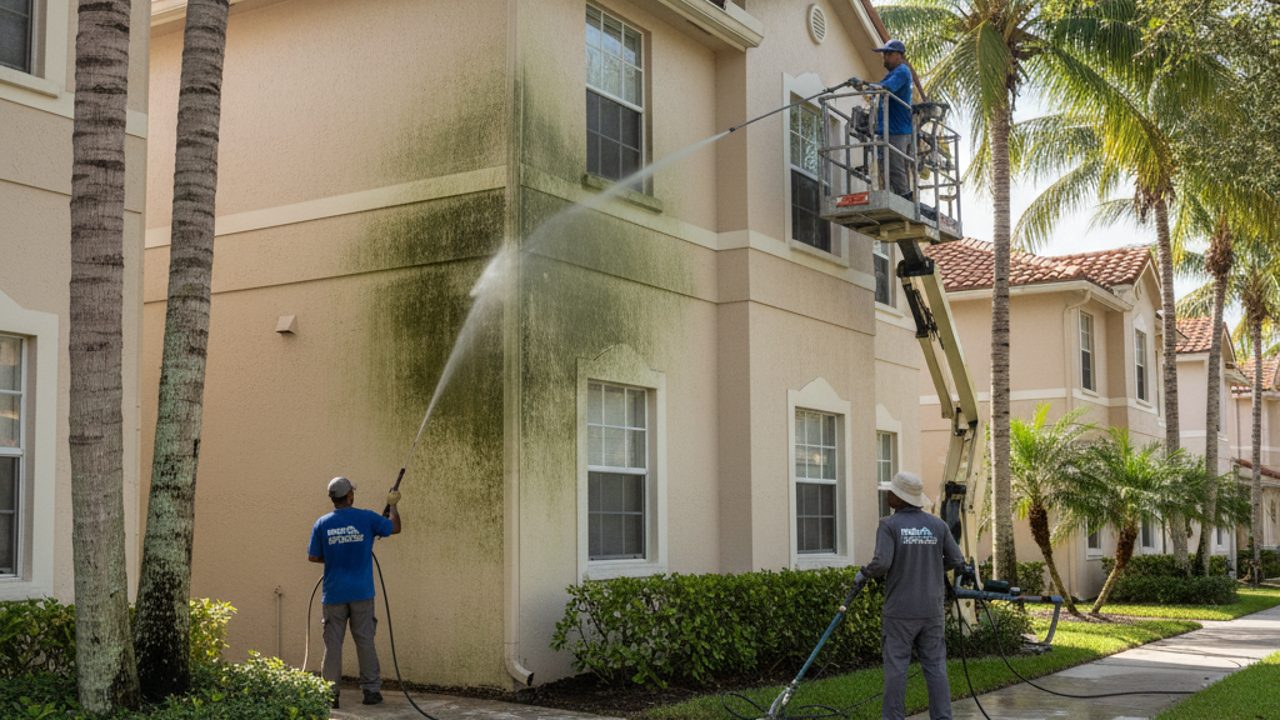
Integrating Exterior Maintenance into the Reserve Study
A Reserve Study is the financial blueprint for any Florida Homeowners Association (HOA) or Condo Association. While roof replacements and asphalt milling often dominate the discussion, exterior envelope maintenance—specifically pressure washing and soft washing—is a critical component of the 'Major Component' list. In the humid, subtropical environment of South Florida, failing to align cleaning cycles with the reserve study leads to accelerated degradation of building materials and unexpected special assessments.
For property managers and board members, exterior cleaning should not be viewed as an occasional aesthetic choice, but as a preventative maintenance line item designed to extend the Useful Life (UL) of capital assets. When a reserve study analyst evaluates the Remaining Useful Life (RUL) of a tile roof or stucco facade, the presence of biological growth like Gloeocapsa magma or Aspergillus niger can significantly reduce those estimates if left untreated.
Technical Cycles: Roofs, Facades, and Flatwork
Florida HOAs face unique atmospheric challenges, including high UV exposure and salt-spray corrosion. A standard reserve study typically categorizes exterior cleaning into three distinct cycles:
1. Roof Systems (3-5 Year Cycle)
Whether your community utilizes barrel tiles, slate, or asphalt shingles, the accumulation of organic biomass retains moisture and heat. Using a low-pressure soft wash system—typically under 100 PSI—with a solution of sodium hypochlorite (SH) and specialized surfactants is the industry standard. By removing the black algae that feeds on the limestone filler in shingles, associations can ensure the roof reaches its full 20-25 year projected lifespan.
2. Vertical Surfaces and Stucco (2-4 Year Cycle)
Stucco is porous. If biological growth penetrates the substrate, it leads to hairline fractures and water intrusion. A scheduled soft wash cycle prevents the need for premature painting (which is a much higher reserve expense). By maintaining the reflectivity of the paint, the thermal expansion and contraction of the building are stabilized.
3. Concrete Flatwork and Pavers (1-2 Year Cycle)
High-traffic areas, including sidewalks, pool decks, and curbing, require surface cleaning at higher pressures (3,000–4,000 PSI) to remove embedded grime and ensure slip resistance. For paver systems, the reserve study must also account for joint sanding and sealing every 3 years to prevent sub-base erosion.
Budgeting for Scale: The Cost of Neglect
When exterior cleaning is deferred beyond the windows recommended in the reserve study, the technical requirements of the job increase. Heavy oxidation on siding or deep-seated calcium carbonate deposits on stone requires specialized acids and longer dwell times, driving up labor costs.
Typical Florida HOA cost ranges for professional-grade commercial services include:
- Roof Soft Washing: $0.07 – $0.15 per square foot (depending on pitch and height).
- Sidewalk Surface Cleaning: $0.15 – $0.30 per linear foot.
- Building Washing: $0.20 – $0.50 per square foot of surface area.
By locking in multi-year service agreements, boards can stabilize these line items against inflation, ensuring the reserve fund remains fully funded according to the study’s projections.
Strategic Maintenance Table
| Component | Maintenance Method | Frequency | Reserve Impact |
|---|---|---|---|
| Concrete Sidewalks | High-Pressure Surface Cleaning | 12-18 Months | Extends RUL by preventing surface scaling |
| Tile/Shingle Roofs | Low-Pressure Soft Wash (SH-based) | 3-5 Years | Prevents premature shingle degradation |
| Stucco Facades | Low-Pressure Chemical Application | 2-4 Years | Extends paint life by 25-30% |
| Paver Common Areas | Pressure Wash + Re-sanding | 3 Years | Prevents trip hazards and weed upheaval |
The Role of Compliance and Safety
Working with a commercial-first partner like Power Washing And More ensures that the HOA is protected from liability. Professional exterior cleaning involves managing runoff in accordance with Clean Water Act guidelines and ensuring that all technicians are covered by high-limit General Liability and Workers' Comp insurance. A reserve study is only as effective as the vendors chosen to execute the work; choosing under-insured contractors can lead to litigation that depletes the very reserves you are trying to protect.
Furthermore, modern reserve studies increasingly factor in energy efficiency. Clean roofs reflect more sunlight, reducing the cooling load on HVAC systems in common areas. This creates a secondary benefit of lowering monthly operating expenses while maintaining the reserve's integrity.
FAQ: HOA Reserve Planning
Can we use our 'General Maintenance' budget instead of Reserves for pressure washing?
Typically, routine cleaning (like monthly pool deck rinsing) falls under the operating budget. However, large-scale community-wide projects—such as cleaning every roof or all perimeter fencing—are often classified as major repairs or replacements in the reserve study because they are non-annual expenses that preserve the asset's value.
Does pressure washing void our roof warranty?
If done incorrectly with high pressure, yes. Most manufacturers, such as GAF or Owens Corning, specify that only soft washing (chemical cleaning) is permissible. Using a professional service that adheres to ARMA (Asphalt Roofing Manufacturers Association) standards ensures your warranty remains intact, which is a key assumption in your reserve study's UL projections.
How does salt air in South Florida change the reserve cycle?
Properties within 5 miles of the coast require more frequent rinsing of metal components (railings, gates, and light fixtures) to prevent salt-air corrosion. Your reserve study should reflect a shortened 1-2 year cycle for these items compared to inland properties to prevent the total replacement of metal assets.