
Restaurant Patio Cleaning Before Tourist Season
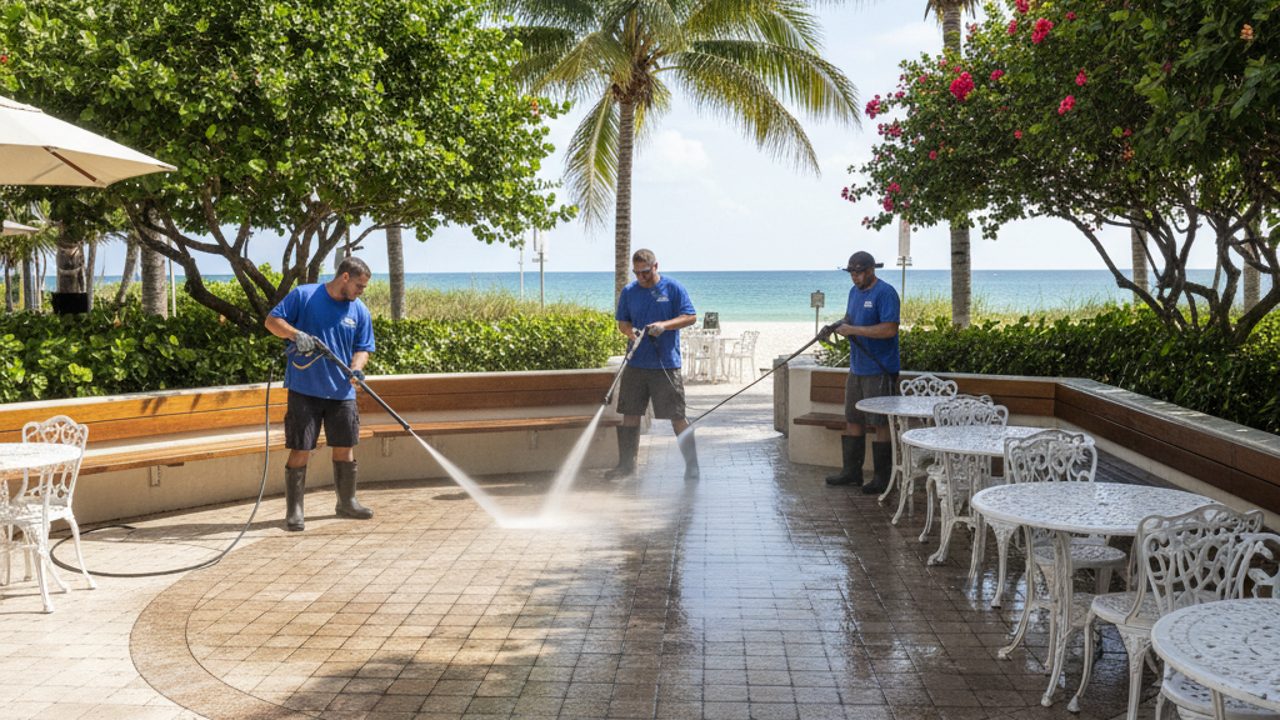
The High Stakes of South Florida’s Outdoor Dining Surfaces
As the Florida tourist season approaches, the pressure on restaurant infrastructure increases exponentially. In regions like Miami-Dade, Broward, and Palm Beach, outdoor dining is not just an amenity—it is a primary revenue driver. However, high-traffic patios are subject to a relentless accumulation of biological and chemical contaminants.
Before the seasonal rush, business owners must address the accumulation of polymerized cooking oils, protein-based food spills, and avian waste. A standard hose-down is insufficient for deep-pore concrete cleaning. Professional-grade restoration requires a specific balance of thermal energy, mechanical pressure (PSI), and chemical emulsification to ensure the surface is not only visually clean but clinically sanitary for high-volume service.
Combating Polymerized Grease and Organic Buildup
The most pervasive issue for Florida restaurateurs is the build-up of fats, oils, and greases (FOG). When these substances settle into porous substrates like concrete or pavers, they undergo oxidation and polymerization, creating a slick, dark film that is both a slip-and-fall liability and a magnet for pests.
To effectively lift these hydrocarbons, Power Washing And More utilizes hot water pressure washing systems capable of reaching temperatures between 180°F and 200°F. Heat is essential for lowering the viscosity of the grease. When paired with alkaline degreasers featuring a high pH (12-14), the grease undergoes saponification, turning the oil into a water-soluble soap that can be safely rinsed away. Without this thermal component, cold water simply moves the grease around, often driving it deeper into the concrete capillaries.
The Technical Removal of Chewing Gum and Tannin Stains
Dried chewing gum is a significant aesthetic detractor that requires precise mechanical intervention. Using excessive PSI (over 4,000) on aged concrete can cause “etching,” permanently damaging the surface cream and exposing the aggregate.
Our technicians utilize specialized oscillating turbo nozzles or flat-surface cleaners that maintain a consistent 2,500 to 3,500 PSI. The combination of heat and specific spray angles allows the gum to delaminate from the surface without compromising the integrity of the substrate. Additionally, seasonal foliage in South Florida often leaves behind tannin stains—dark, tea-like discolorations caused by decaying organic matter. These require an acidic neutralizing agent after the initial alkaline wash to restore the concrete's original pH and brightness.
Sanitization: Addressing Bird Droppings and Microbial Growth
In South Florida’s humid climate, outdoor patios are breeding grounds for Gloeocapsa magma (black algae) and various molds. Furthermore, the presence of pigeons and other local birds introduces uric acid and pathogens like E. coli and Salmonella.
We utilize a “soft wash” application of sodium hypochlorite (SH) in concentrations ranging from 1% to 3%, depending on the severity of the infestation. This surfactant-enhanced solution acts as a biocide, killing the root systems of organic growth rather than just shearing off the surface layer. This ensures that the patio remains cleaner for a longer duration through the peak tourist months.
Critical Cleaning Specifications for Patios
| Contaminant | Treatment Method | Technical Requirement |
|---|---|---|
| Cooking Oils / FOG | Thermal Emulsification | 180°F - 200°F + Alkaline Degreaser |
| Chewing Gum | Delamination | 3,000 PSI + Steam Induction |
| Algae / Mold | Soft Wash Biocide | 1-3% Sodium Hypochlorite Solution |
| Bird Waste | Pathogen Sanitization | High-Volume Rinse + EPA-Registered Disinfectant |
| Rust / Irrigation Stains | Acidic Neutralization | Oxalic or Phosphoric Acid Application |
Long-Term Protection with Professional Sealing
Once the deep-cleaning process is complete, the porous nature of Florida concrete and pavers remains a vulnerability. To mitigate future staining and simplify daily maintenance during the busy season, we recommend the application of a high-quality penetrating sealer. Unlike topical coatings that can become slippery when wet, penetrating sealers work at the molecular level to create a hydrophobic barrier. This prevents liquids from entering the pores, ensuring that a spilled glass of red wine or a greasy appetizer stays on the surface for easy cleanup by your staff.
FAQ: Restaurant Patio Maintenance
How often should a commercial patio be professionally cleaned?
For high-traffic South Florida establishments, a deep-clean is recommended quarterly. However, a pre-season restoration is critical to clear the accumulation of the off-season humidity and organic growth before customer volume peaks.
Will the chemicals used affect my outdoor landscaping or customers?
We utilize sodium hypochlorite and biodegradable surfactants that are highly diluted. We employ a pre-soak and post-rinse protocol for all surrounding vegetation to ensure no damage occurs. For safety, cleaning is typically performed during off-hours (late night or early morning) to ensure the surfaces are dry and neutralized before service begins.
Does hot water pressure washing damage pavers or joint sand?
When performed by technicians using flat-surface cleaners rather than handheld wands, the pressure is distributed evenly, preventing the displacement of joint sand. If sand is lost during the removal of heavy grease, we offer re-sanding services using polymeric sand to stabilize the pavers and prevent future weed growth.