
Preventing Rust Stains From Well-Water Irrigation
The Chemistry of South Florida Irrigation Stains
In South Florida, the aesthetic integrity of commercial facades and residential driveways is constantly under siege by groundwater chemistry. Property owners in areas like Jupiter, West Palm Beach, and Boca Raton often face persistent orange and brown discoloration on stucco, concrete, and PVC fencing. These are not merely dirt deposits; they are oxidized iron minerals originating from the Floridan and Biscayne aquifers.
When well water is extracted for irrigation, it contains dissolved ferrous iron ($Fe^{2+}$). This form of iron is colorless and soluble. However, as soon as the sprinkler heads atomize the water and it hits the air, a chemical reaction called oxidation occurs. The ferrous iron converts to ferric iron ($Fe^{3+}$), creating iron oxide—commonly known as rust. Because Florida’s limestone-heavy geology often results in high pH levels, this staining bonds aggressively to porous masonry surfaces, requiring more than just high-pressure water for removal.
Optimizing Sprinkler Head Geometry and Placement
The first line of defense in rust prevention is mechanical control. Many properties suffer from "overspray," where poorly calibrated irrigation heads distribute mineral-rich water onto non-target surfaces like walkways and building envelopes.
To mitigate staining, transition from high-trajectory impact heads to low-angle nozzles. Standard nozzles often have a 25-degree trajectory, which catches the wind and carries iron mist onto walls. Switching to a 10-degree or 15-degree low-angle nozzle keeps the water stream focused on the turf. Furthermore, installing part-circle rotors with precise edge-adjustments ensures that the radius of the spray stops exactly at the curb line. Regularly auditing the system for broken heads or "geysers" is critical, as a single failed seal can dump gallons of untreated groundwater onto a driveway, resulting in a deep set stain within 48 hours.
Chemical Inhibition: Siphoning Systems and Filters
For properties with high iron concentrations—exceeding 0.3 parts per million (ppm)—mechanical adjustments are insufficient. In these cases, a chemical injection system, often referred to as a siphoning system or rust-prohibitor tank, is necessary. These systems inject a sequestering agent, typically a food-grade polyphosphate, into the main irrigation line.
The polyphosphate works by surrounding the dissolved iron molecules, preventing them from oxidizing when they contact oxygen. This keeps the iron in a soluble state even after the water hits the pavement. For larger commercial installations in South Florida, these tanks must be monitored monthly to ensure the dosage remains calibrated to the specific flow rate of the pump station.
Additionally, specialized irrigation filters can be installed at the well-head. These use media like manganese greensand or catalytic carbon to physically remove iron particles before they enter the distribution lines. While the initial capital expenditure for filtration is higher, it significantly reduces the long-term cost of chemical stain removal.
Professional Removal: Beyond Pressure Washing
When prevention fails, the removal process requires a technical understanding of pH-balancing. A common mistake made by DIYers and inexperienced contractors is attempting to blast rust stains away using high PSI alone. Utilizing a turbo nozzle at 4,000 PSI on a stucco wall will likely cause permanent etching or "wand marks" before it removes the iron oxide.
Professional restoration involves a chemical process called chelation. We utilize acidic cleaners, specifically formulated with oxalic acid or phosphoric acid, to break the ionic bond between the iron oxide and the substrate.
The Restoration Process:
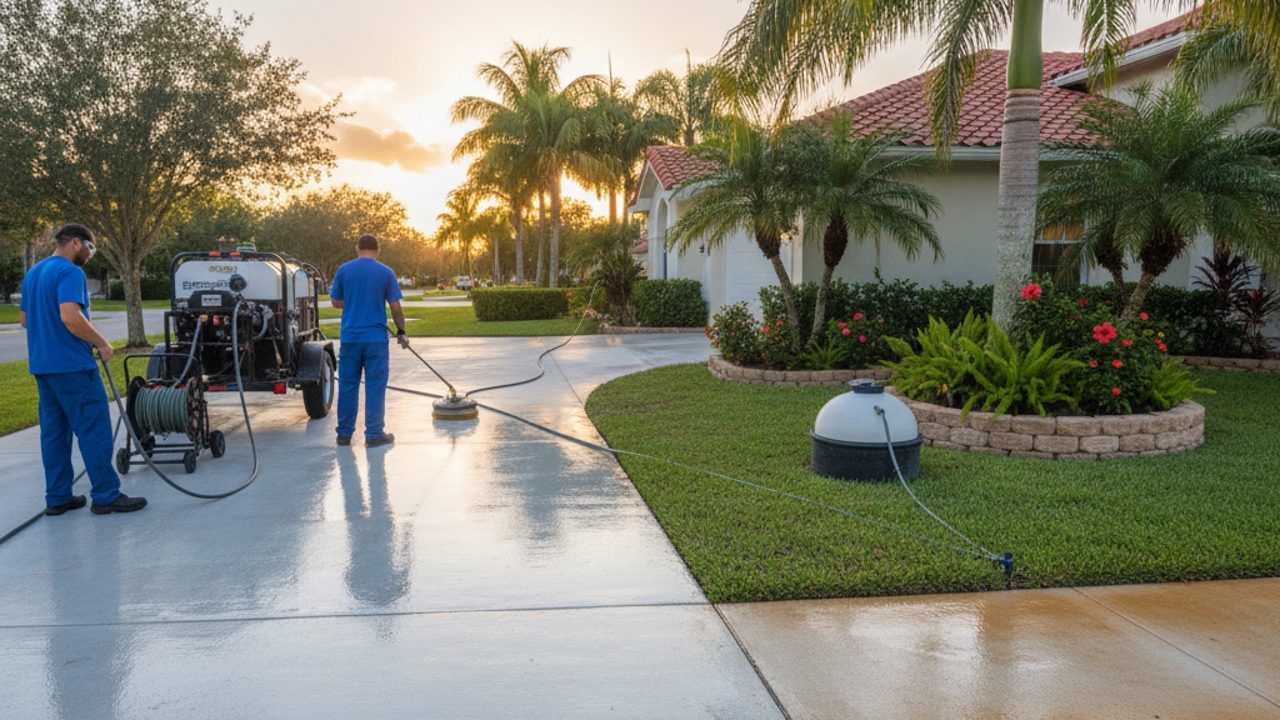
- Pre-Hydration: Saturating the surrounding vegetation and the substrate with fresh water to prevent the cleaning solution from soaking too deeply into the masonry.
- Chemical Application: Applying the rust remover at a controlled concentration. The acid reacts with the iron oxide, turning the orange stain into a colorless, water-soluble complex.
- Low-Pressure Rinse: Rinsing the surface with a high-volume, low-pressure (under 1,000 PSI) stream to flush the minerals away without damaging the surface.
- Neutralization: Applying a light alkaline wash to ensure the pH of the surface is returned to neutral, protecting the integrity of the paint or concrete sealer.
Comparison of Preventative Measures
| Method | Primary Benefit | Maintenance Frequency | Typical Cost Impact |
|---|---|---|---|
| Nozzle Adjustment | Reduces overspray contact | Quarterly | Low (Labor only) |
| Polyphosphate Injection | Prevents oxidation via sequestering | Monthly Refills | Moderate (Recurring) |
| Greensand Filtration | Removes iron at the source | Annual Media Swap | High (Upfront) |
| Professional Soft Washing | Restores aesthetics without damage | As Needed | Moderate |
Maintaining The Barrier: Sealing and Coating
Once the rust has been chemically removed, the best way to prevent future deep-set staining is the application of a high-quality penetrative sealer. For South Florida pavers and concrete, a silane-siloxane sealer creates a hydrophobic barrier. This doesn't necessarily stop the water from hitting the surface, but it prevents the iron-laden water from penetrating the pores. Instead of the iron bonding inside the concrete, it sits on top of the sealer, making it significantly easier to rinse away during routine maintenance.
Frequently Asked Questions
Can I use bleach to remove rust stains from my driveway?
No. Sodium hypochlorite (bleach) is an oxidizing agent. Since rust is the result of oxidation, applying bleach can actually darken and set the stain further into the concrete. Rust removal requires an acidic reducing agent, not an alkaline oxidizer like bleach.
How often should I refill my rust-prohibitor tank?
In South Florida’s climate, where irrigation may run 3-4 times per week, most 30-gallon tanks require a refill every 4 to 6 weeks. This depends heavily on your pump's flow rate (GPM) and the iron concentration in your specific well.
Will rust removal chemicals damage my landscaping?
If handled improperly, yes. However, professional technicians use pre-wetting techniques and neutralizing agents to protect turf and tropical plants. Always ensure your service provider is experienced in the specific chemistry of South Florida water mineral removal.