Cleaning Screen Enclosures After Summer Storms
Post-Storm Structural Analysis: The Impact of Florida Summer Rains
South Florida’s summer storm season, characterized by high humidity and frequent convective downpours, creates a localized microclimate within pool enclosures. The combination of stagnant moisture and organic debris leads to rapid biological colonization. While the aesthetic decline is immediate, the structural implications are more severe. Debris caught in the spline channels holds moisture against the aluminum, potentially leading to oxidation, while fungal growth can degrade the integrity of fiberglass screen mesh over time.
After a major weather event, the first step is a technical assessment of the enclosure. High winds often force particulate matter into the weave of the mesh. If left untreated, these particulates act as an abrasive, weakening the tensile strength of the screen. Power Washing And More utilizes a low-pressure approach to ensure these contaminants are removed without stretching the material or dislodging the spline that holds the screen in place.
The Chemistry of Algae and Mildew Removal on Aluminum Frames
Aluminum pool cages are typically finished with a high-quality powder coating or architectural paint. However, the alkaline nature of Florida’s rain and the presence of organic tannins from nearby vegetation create a breeding ground for Gloeocapsa magma and other fungal spores.
To effectively neutralize these organisms, we employ a soft wash process. High-pressure washing (exceeding 2,500 PSI) is often detrimental to screen enclosures, as it can strip the protective finish from the aluminum and tear the mesh. Our technical protocol involves a specific chemical solution:
- Sodium Hypochlorite (SH): Diluted to a 1% to 2% solution depending on the severity of the infestation. This serves as the primary biocide to kill spores at the root.
- Surfactants: High-viscosity foaming agents that allow the biocide to cling to vertical and overhead aluminum beams, increasing dwell time for maximum efficacy.
- Neutralizers: Post-application rinses that ensure no corrosive residue remains on the metal or the surrounding pool deck.
Protecting the Integrity of Your Screen Mesh
Most modern South Florida enclosures utilize Phifer or similar high-density polyethylene or fiberglass mesh. These materials are UV-stabilized but remain susceptible to biological clogging. When the pores of the screen are filled with mildew and dust, airflow is restricted, which can increase the 'sail effect' during high winds, putting unnecessary lateral pressure on the structural anchors and cables.
Our cleaning process focuses on deep-penetration rinsing. By using high-volume, low-pressure water (approximately 8-10 gallons per minute at less than 800 PSI), we can flush the weave of the screen entirely. This removes the 'graying' effect caused by embedded dust and restores the clear visibility and airflow intended by the manufacturer.
Technical Comparison: DIY vs. Professional Restoration
| Feature | DIY Method | Professional Soft Wash |
|---|---|---|
| Equipment | Standard Garden Hose / Consumer PW | Industrial Grade Low-Pressure Pumps |
| Chemistry | Dish Soap or Retail Bleach | Industrial SH + Professional Surfactants |
| Reach | Limited to 8-10 ft Ladders | Telescoping Wands (up to 40 ft) |
| PSI Control | High Risk of Screen Blowouts | Regulated < 1,000 PSI |
| Longevity | 3-4 Months | 12-18 Months (Biocidal Kill) |
The Critical Role of Gutter and Spline Cleaning
One of the most overlooked aspects of post-storm maintenance is the 'super gutter'—the heavy-duty structural gutter that connects the pool cage to the home’s fascia. During summer storms, these gutters accumulate significant biomass. If the downspouts are obstructed, the weight of the standing water can stress the connection points of the enclosure.
Furthermore, the spline—the rubber cord that locks the screen into the aluminum frame—acts as a gutter for fine silt. We utilize specialized tips to flush these channels. Removing this silt is essential for preventing the premature 'dry rot' of the rubber spline, which is the leading cause of screens 'popping' during the next storm event.
Maintenance Schedules and Environmental Factors
In South Florida, the frequency of cleaning is dictated by proximity to salt water and foliage density. Properties within five miles of the coast face salt-air crystallization, which requires more frequent rinsing to prevent aluminum pitting. For most commercial and residential properties in areas like Fort Lauderdale or West Palm Beach, a professional soft wash is recommended every 12 to 18 months to maintain structural integrity and aesthetic clarity.
Frequently Asked Questions
Will the cleaning solution harm my pool chemistry?
No. When performed correctly, the runoff is minimal and heavily diluted. We recommend running the pool filter during the process and checking the pH levels afterward, but the impact is typically negligible compared to the organic matter removed from the cage.
Can you clean the overhead 'roof' panels of the cage?
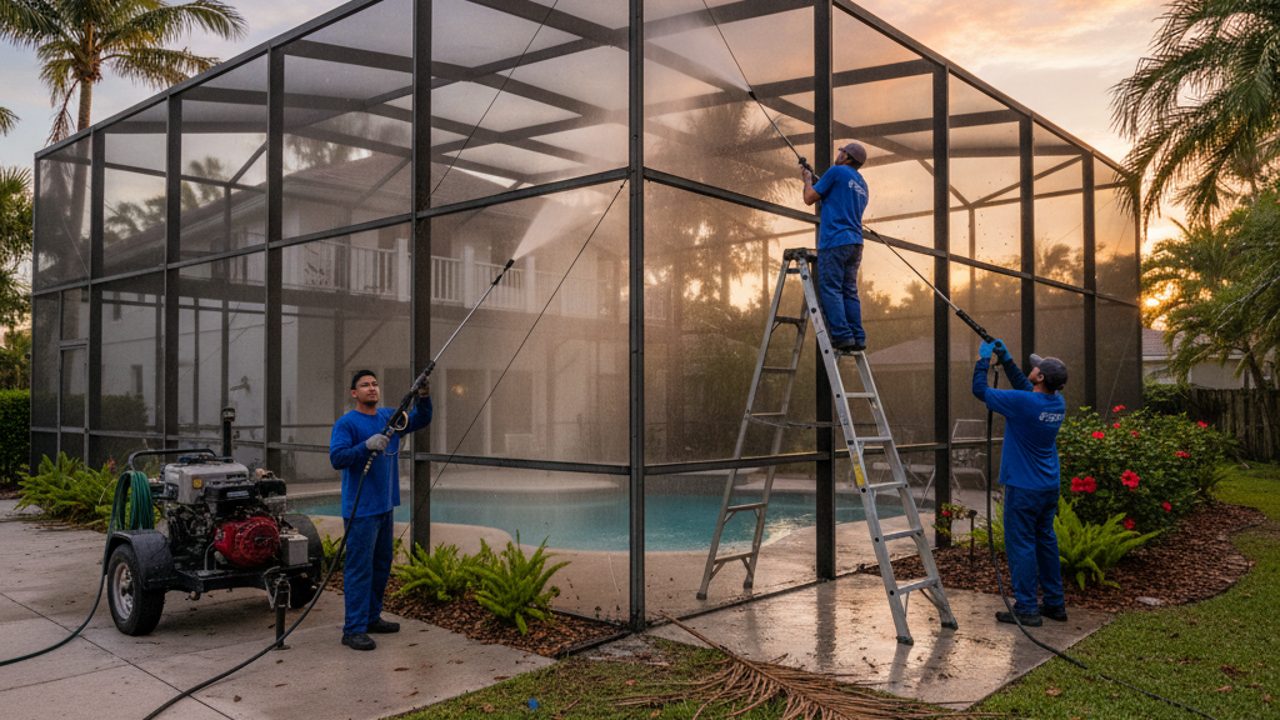
Yes. Using specialized extension wands and high-volume pumps, we can treat the highest peaks of a multi-story enclosure without the need to walk on the structure, which protects the aluminum members from bending or buckling.
How long does the process take for a standard enclosure?
For a typical 20x40 foot pool cage, a thorough professional soft wash and rinse takes approximately 2 to 4 hours. This includes the time needed for the biocide to dwell and achieve a 100% kill rate of organic growth.
Is high pressure ever used on the screens?
Never. High pressure is the primary cause of screen failure during cleaning. We rely on chemical action and high-volume rinsing to do the work, ensuring the mesh remains taut and undamaged.