
How to Clean Stucco Without Damaging It
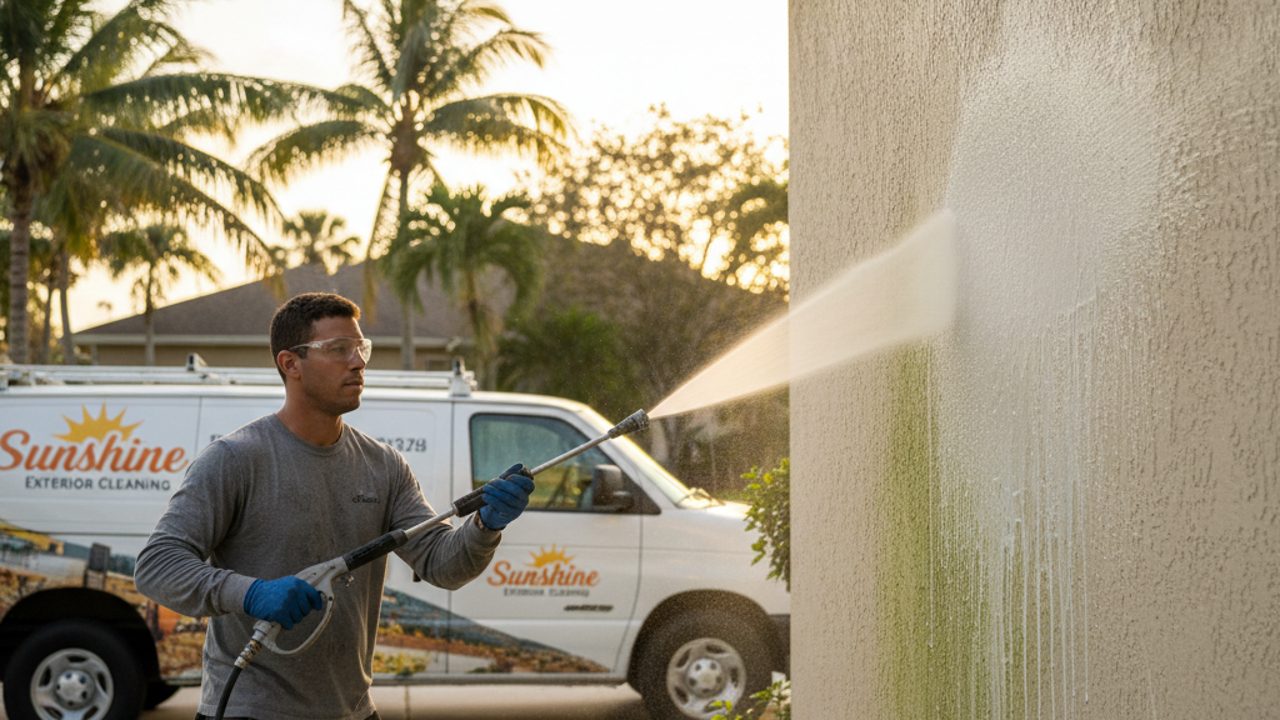
The Vulnerability of Florida Stucco
Stucco remains the predominant exterior finish across South Florida, from Jupiter down to Miami. Whether it is a traditional three-coat cementitious application or a modern EIFS (Exterior Insulation and Finish System), the surface is inherently porous. This porosity, combined with Florida’s 70%+ average humidity, creates an ideal substrate for Gloeocapsa magma, green algae, and mildew.
However, the most common mistake made by property managers and homeowners is attempting to blast these contaminants off with high-pressure water. Standard pressure washing—often exceeding 3,000 PSI—is catastrophic for stucco. It creates micro-fissures in the finish, forces water into the building envelope leading to structural rot, and destroys the delicate texture of the masonry. The industry standard for cleaning these surfaces safely is professional soft washing.
The Chemistry of Soft Washing
To clean stucco without mechanical force, we rely on a chemical solution designed to sanitize the surface. The core component is Sodium Hypochlorite (SH), typically sourced at a professional grade of 12.5%. For standard stucco maintenance, we target a Soft Wash Mix (SWM) between 1.5% and 3% strength at the point of impact.
This solution serves three primary purposes:
- Sanitization: It kills the root system of organic growth rather than just shearing off the surface layer.
- Surfactant Action: We add a specialized surfactant (soap) to reduce the surface tension of the water. This allows the mix to "cling" to vertical stucco walls, preventing immediate runoff and ensuring the chemicals have time to work.
- De-staining: The oxidative properties of the SH lift the dark carbon staining and biological pigments out of the stucco’s pores.
The Professional Process: Dwell Time and Technique
Successful stucco cleaning is a four-stage process that prioritizes chemical reaction over physical agitation.
1. Pre-Wetting and Plant Protection
Before any chemicals touch the building, all peripheral landscaping must be saturated with fresh water. Stucco cleaning solutions can desiccate tropical foliage. By pre-wetting, you ensure that if any overspray hits a leaf, it is diluted and runs off rather than being absorbed. We also cover sensitive electronics, such as Ring doorbells or outdoor speakers, with plastic sheeting.
2. Application
Using a dedicated soft wash pump (diaphragm or 12v system), we apply the solution at low pressure, typically under 100 PSI—similar to the pressure of a garden hose. We apply from the bottom up to prevent streaking, ensuring even coverage across the architectural details common in Mediterranean-style South Florida homes.
3. Dwell Time
Dwell time is the most critical variable. The solution must remain wet on the stucco for 10 to 20 minutes depending on the severity of the infestation. If the stucco is heavily oxidized or has thick black mold, a second light application may be necessary. The goal is to see the organic matter change from green/black to a light brown or translucent state, indicating the organisms are dead.
4. The Low-Pressure Rinse
Once the dwell time is complete, we rinse the surface using a high-volume, low-pressure technique. We utilize a wide-degree nozzle (40 to 65 degrees) to ensure the impact force remains below 500 PSI. This removes the spent chemicals and dead organic matter without etching the finish or blowing out the caulking around windows.
Equipment and Chemical Specifications
For those looking to understand the technical requirements of a safe stucco clean, the following table outlines the parameters used by professional crews.
| Parameter | Specification | Purpose |
|---|---|---|
| Pump Type | Diaphragm or 12v / Air-Diaphragm | High volume, low impact pressure |
| Chemical Mix | 1.5% - 3% Sodium Hypochlorite | Chemical sanitization of pores |
| Surfactant | Bio-degradable Hi-Foam | Increases dwell time and visibility |
| Pressure | 60 - 300 PSI | Prevents substrate damage and water intrusion |
| Water Volume | 5 - 8 Gallons Per Minute (GPM) | Essential for thorough rinsing and dilution |
Addressing Rust and Irrigation Staining
In South Florida, stucco often suffers from orange or reddish staining caused by high iron content in well-water irrigation systems. Sodium Hypochlorite will not remove these stains; in fact, it can sometimes set them. For these specific areas, we utilize an acid-based cleaner, such as Oxalic or Phosphoric acid, after the organic wash is complete. These acids neutralize the metallic bonds, lifting the rust stain from the masonry without the need for scrubbing.
Long-Term Maintenance for Florida Commercial Properties
For commercial storefronts and HOAs, maintaining stucco is about more than aesthetics; it is about asset preservation. When mold is allowed to sit on stucco, it traps moisture against the building. Over time, this leads to the degradation of the paint binder, resulting in "chalking." By soft washing every 12 to 24 months, property owners can extend the life of their exterior paint by up to 30%, delaying expensive repainting projects while keeping curb appeal at a premium.
Frequently Asked Questions
Will soft washing kill my landscaping?
Not if performed correctly. Professionals use a "continuous rinse" method, where one technician applies the solution while another constantly saturates the grass and plants. By keeping the plants hydrated and diluting any runoff immediately, the risk to your Florida landscape is virtually eliminated.
How long does the cleaning last?
Because soft washing kills the spores at the root, the results typically last 2-3 times longer than traditional pressure washing. In South Florida's climate, you can generally expect a clean surface for 12 to 24 months, depending on shade coverage and nearby vegetation.
Can I use a rented pressure washer to do this myself?
It is not recommended. Most rental units are high-pressure, low-volume machines. To clean stucco safely, you need the opposite: low-pressure, high-volume. Without the ability to precisely mix the chemical ratios (downstreaming vs. batch mixing), you risk either burning your plants with too much bleach or damaging your stucco with too much pressure.
Is the smell of bleach overwhelming?
During the process, there is a noticeable scent of chlorine, similar to a public swimming pool. However, because we use surfactants with scent-masking agents and perform a thorough final rinse, the odor typically dissipates within one to two hours after the job is completed.