
Cleaning Composite Decking Safely: PSI Limits and Detergents
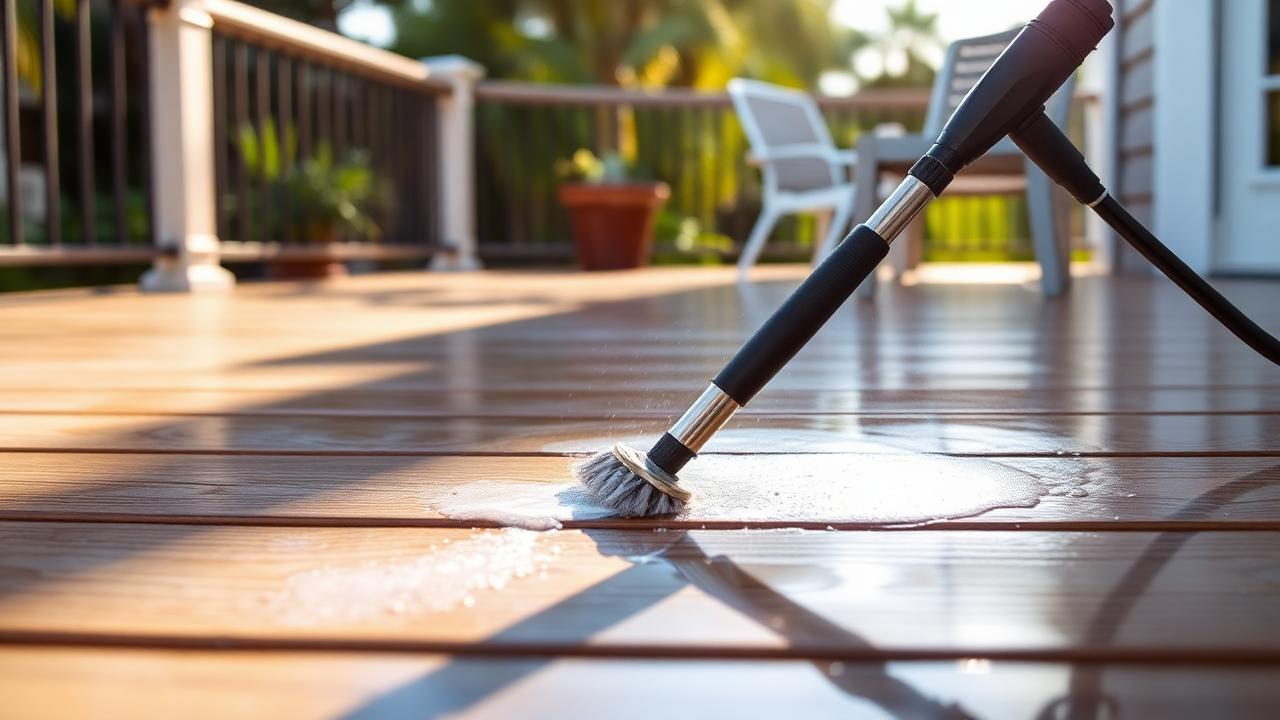
Composite decking has become the default choice for pool decks, dock walkways, and outdoor amenity spaces across South Florida, and for good reason — it resists rot and doesn't need annual staining. But composite is not indestructible, and the humid, algae-friendly climate here means these surfaces get dirty fast. Property managers who assume composite can be blasted like concrete often end up with fuzzy, fading boards and a warranty claim denial letter from the manufacturer.
The truth is that composite decking requires a gentler, more deliberate cleaning approach than almost any other exterior surface we service. Getting the pressure, nozzle, and chemistry right the first time protects both the material and the budget, since most composite brands carry 25-to-50-year warranties that are void the moment improper pressure washing is documented.
This guide covers what actually works on composite boards in a Florida climate, why manufacturer PSI limits exist, and how a professional soft washing approach keeps decks looking new without the fuzzing, splintering, or color loss that comes from DIY blasting.
Why Composite Fuzzes and Fades Faster Here Than Up North
Florida's UV index and near-constant humidity accelerate two things on composite boards: the growth of algae and mildew in the wood-fiber matrix, and the breakdown of the capstone or shell layer that protects that matrix. Boards installed near pools or the Intracoastal pick up chlorine overspray, salt air, and suntan oil residue on top of standard organic growth, creating a slicker, darker film than composite decking sees in drier climates.
That combination means South Florida properties typically need composite deck cleaning twice a year, versus once a year in cooler regions. Waiting longer lets algae work into the surface texture, which then requires more aggressive cleaning to remove — the exact scenario that leads to warranty-voiding pressure damage.
Manufacturer PSI Limits and Why They Exist
Every major composite brand — Trex, TimberTech, Fiberon, AZEK — publishes a maximum pressure washing spec, and nearly all of them cap fan-tip pressure at 3,100 PSI at a minimum 12-inch distance, measured with a wide fan tip of 40 degrees or greater. Many brands recommend staying well under that, in the 1,500-2,500 PSI range, when using a rotating or narrow tip.
The reason is structural, not cosmetic. Composite boards have a wood-fiber core wrapped in a polymer shell. A narrow, high-pressure stream can strip that shell in a linear stripe, exposing the fibrous core underneath. Once exposed, that spot absorbs water and grows mildew faster than the surrounding board forever after — it cannot be repaired, only replaced.
| Cleaning Method | Typical PSI | Risk to Composite | Best Use |
|---|---|---|---|
| Soft washing (low-pressure + chemical) | 500-800 | Minimal | Routine biannual maintenance |
| Wide fan tip, hand-held | 1,500-2,500 | Low if distance maintained | Heavier soil, stains |
| Narrow or rotating tip | 3,000+ | High — can strip capstone | Should be avoided on composite |
| Surface cleaner attachment | Varies | Moderate — uneven pressure at edges | Not recommended without composite-rated nozzle |
The Detergent Side: What Actually Lifts Algae Without Bleaching Color
Pressure alone rarely removes the biological staining that gives composite decks that greenish-gray cast. A properly diluted sodium hypochlorite solution, applied at low pressure and given proper dwell time, breaks down the organic matter so it rinses away instead of needing to be scrubbed or blasted off. This is the same soft washing principle we use on roofs and siding, adapted with lower concentrations appropriate for composite's more porous surface.
Straight bleach at high concentration, however, can dull the capstone finish and strip color from darker board lines like walnut or coastline gray. We test concentration on an inconspicuous board section first and always follow with a fresh-water rinse to neutralize residual chemical before it dries into the surface.
Mistakes We See Most Often on Florida Properties
- Using a rented gas pressure washer with a zero-degree or 15-degree tip out of convenience
- Skipping the pre-treatment soak and going straight to pressure, which forces workers to compensate with higher PSI
- Cleaning only the visible top surface and ignoring gap buildup between boards, which re-seeds algae growth within weeks
- Power washing during peak midday heat, which flash-dries chemical before it can work and leaves streaking
Building a Maintenance Schedule That Protects the Warranty
Most manufacturers require documented proof of proper maintenance to honor a warranty claim, which means keeping a simple record of cleaning dates and method used is worth the five minutes it takes. For HOAs, condo associations, and commercial pool decks, we recommend pairing composite deck cleaning with the same visit as paver sealing work nearby, since crews and equipment are already mobilized and dwell-time chemistry overlaps well between the two surfaces.
Frequently Asked Questions
Can composite decking be pressure washed at all?
Yes, but only within manufacturer-specified PSI and with a wide fan tip held at proper distance. Soft washing with appropriate dwell time is the safer default for routine cleaning, with light pressure reserved for stubborn spots.
Will cleaning remove scratches or fading from composite boards?
No. Pressure washing removes surface soil, algae, and mildew, but it cannot restore color that has already faded from UV exposure or repair scratches in the capstone. Prevention through regular cleaning is the only way to slow that fading.
How often should a South Florida pool deck get cleaned?
Twice yearly is typical for shaded or waterfront composite decking that stays damp; sun-exposed decks with good airflow can sometimes go on an annual schedule, but a spring and fall visit catches problems before staining sets in.
Does cleaning composite decking require a licensed contractor?
It's not legally required for residential decks, but for commercial and HOA properties, using an insured contractor who documents chemical concentration and PSI protects the association from liability if a warranty dispute arises later.
If your composite decking is looking dull, algae-streaked, or slick underfoot, request a free quote from Power Washing and More! and we'll assess the boards, confirm the manufacturer's cleaning spec, and get them safely restored without risking the warranty.