
Cleaning Salt Spray Off Coastal South Florida Homes
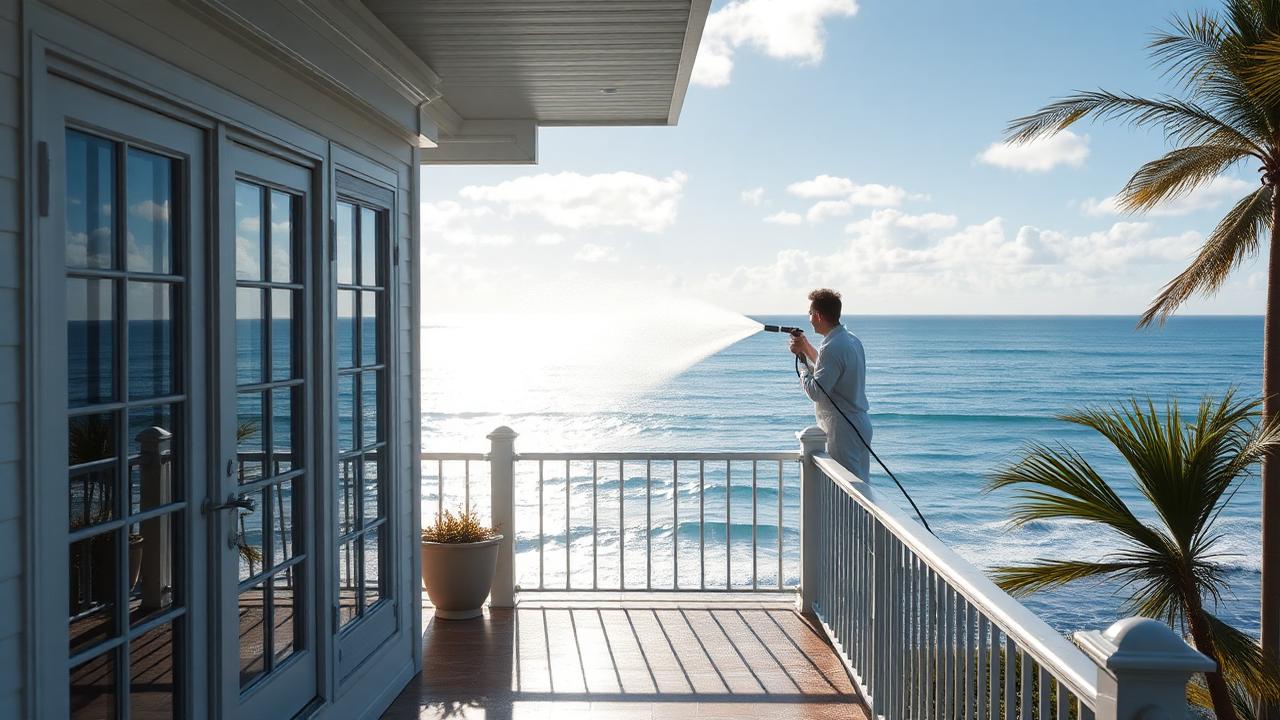
Homes along the Intracoastal, in beachside communities from Sunny Isles to Fort Lauderdale Beach, and anywhere within a few miles of the Atlantic face a corrosion challenge that inland properties never see: airborne salt spray. Carried on ocean breezes, fine salt particles settle on stucco, windows, railings, metal fixtures, and pavers every single day, and over time that invisible film does real damage if it's never washed away.
Unlike dirt or algae, salt doesn't just sit on a surface looking unattractive. It's chemically corrosive, drawing moisture out of the air and accelerating rust on metal railings, hardware, and even hurricane shutters. On stucco and painted surfaces, salt crystals can work into hairline cracks and expand, widening them over repeated humidity cycles.
This article covers where salt accumulates fastest, why regular washing matters more for coastal properties than inland ones, and what a proper salt-removal cleaning actually involves.
Where Salt Buildup Hides on Your Property
Salt spray doesn't distribute evenly. Wind-facing walls, especially those facing east or southeast toward prevailing ocean breezes, take the brunt of it. Railings, pool cages, and any exposed metal near the coast corrode noticeably faster than the same materials just a mile or two inland.
Window frames and glass develop a hazy film that's often mistaken for hard water spots but is actually a mix of salt residue and airborne pollutants. Pavers and pool decks near the water accumulate salt in their porous surface, which can interfere with sealant adhesion if not cleaned before a sealing job.
The Hidden Cost of Ignoring It
Left untreated, salt-accelerated corrosion can shorten the life of railings, screen enclosure frames, and even AC condenser units. Stucco that holds salt moisture longer than it should is also more prone to hairline cracking, which becomes an entry point for water during heavy summer storms.
Comparing Coastal vs. Inland Cleaning Needs
| Factor | Coastal Property (within ~2 miles) | Inland Property |
|---|---|---|
| Recommended wash frequency | Every 3-4 months | Every 6-12 months |
| Primary contaminant | Salt film, corrosion | Algae, dirt, pollen |
| Metal fixture risk | High rust/corrosion risk | Lower risk |
| Paver sealing importance | Higher, salt speeds sand erosion | Standard |
How Professional Salt Removal Differs From a Regular Wash
A standard rinse with a garden hose won't dissolve salt crystals that have bonded to a porous surface like stucco or paver joints. Professional cleaning uses a combination of appropriate water pressure and, where needed, a mild cleaning solution that breaks the salt's grip on the surface rather than just displacing water across it.
Screens, railings, and window frames often need a separate, gentler approach so the salt film is lifted without scratching finishes or damaging screen mesh. This is where soft washing techniques, rather than straight high-pressure blasting, tend to perform better on painted or coated coastal surfaces.
Building Washing for Condos and Coastal Commercial Property
Multi-story condo buildings along the coast face an even bigger salt exposure problem simply because of height and wind exposure on upper floors. Balconies, railings, and exterior walls on oceanfront buildings often need scheduled washing as part of routine building maintenance and reserve planning. Our building washing services are built around this exact challenge, using lift equipment and controlled rinsing to clean upper floors without streaking lower levels.
Protecting Metal and Painted Surfaces After Cleaning
Once salt film is removed, some homeowners choose to apply a protective coating to railings or hardware to slow the next round of corrosion. On stucco, a fresh coat of exterior paint after cleaning creates a smoother, less porous surface that resists salt adhesion better than aged, chalky paint.
Regular rinsing between full professional cleanings, especially after a Nor'easter-style wind event or a period of unusually calm, humid weather, can extend the time between full-service cleanings and reduce long-term maintenance costs.
Frequently Asked Questions
How often should coastal homes be washed for salt?
Most homes within two miles of the ocean benefit from washing every three to four months, while properties directly on the water may need more frequent attention during windy seasons.
Does salt really damage stucco?
Yes. Salt crystals can migrate into small cracks and expand with humidity changes, gradually widening cracks and accelerating deterioration if the surface isn't cleaned regularly.
Can salt spray be cleaned off screen enclosures without damaging the mesh?
Yes, when done with low-pressure soft washing techniques and the right dwell time, screens can be cleaned effectively without tearing or stretching the mesh.
Is salt removal different from regular pressure washing?
It can be. Salt is more chemically bonded to surfaces than typical dirt, so cleaning solutions formulated to break that bond often produce better, longer-lasting results than pressure alone.
Salt Residue vs. Dirt: Why It Needs a Different Approach
Ordinary dirt rinses away easily, but salt is different. It's hygroscopic, meaning it pulls moisture from the air and re-crystallizes on surfaces, which is why homes near the Intracoastal or ocean in Fort Lauderdale, Boca Raton, and Palm Beach often look hazy or chalky even a day or two after cleaning. A proper coastal cleaning uses a solution formulated to dissolve salt crystals rather than just push them around, followed by a thorough fresh-water rinse so no residue is left behind to re-bond with the surface once it dries.
Areas That Get Overlooked
- Window tracks and screens, where salt builds up in the corners
- Metal railings and hardware, which corrode faster once salt sits on them
- Pool cages and lanai screens, which trap salty air against the mesh
- HVAC condenser coils, which lose efficiency when caked with salt film
If your coastal home is showing that dull salt haze on windows, railings, or walls, Power Washing and More! offers dedicated salt-removal cleaning throughout South Florida's coastal communities. Browse our full range of exterior cleaning services or request a free quote to schedule your next visit.