
Concrete Sealing vs Paver Sealing: Which Does Your Property Need?
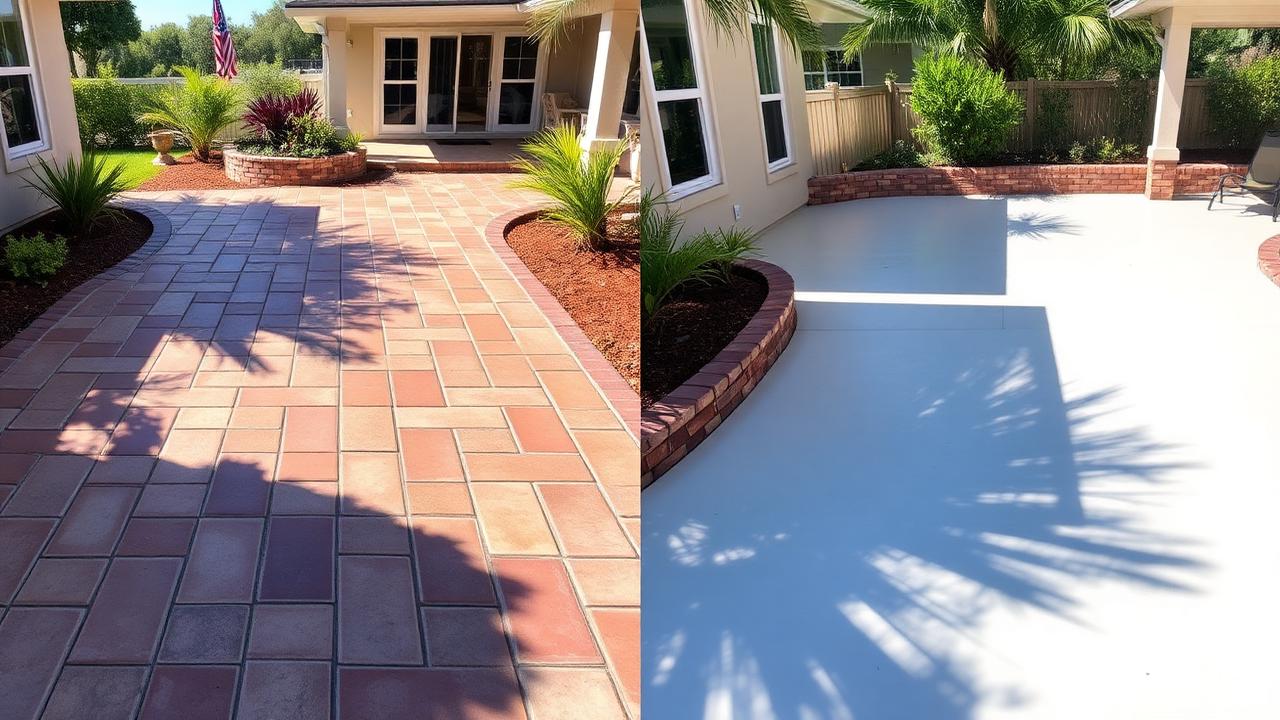
Sealing is one of the most effective ways to protect outdoor hardscape from South Florida's relentless sun, heavy seasonal rain, and near-constant humidity, but concrete sealing and paver sealing aren't the same service, and using the wrong approach can lead to disappointing results or even damage. Understanding the differences helps property owners make the right choice for driveways, pool decks, patios, and walkways.
The confusion is understandable. Both processes involve applying a protective coating to an outdoor surface, and both aim to reduce staining, slow algae growth, and extend the life of the hardscape. But the materials themselves behave very differently, which means the sealing products and application techniques need to match the surface underneath.
This guide breaks down what sets these two sealing types apart and how to determine which one your South Florida property actually needs.
How Concrete and Pavers Differ as Sealing Surfaces
Poured concrete is a single, continuous slab with a relatively uniform surface, while pavers are individual units set close together with sand-filled joints between them. That structural difference matters enormously for sealing, since paver sealants need to lock the joint sand in place in addition to protecting the surface, a function concrete sealants don't need to perform at all.
Concrete also tends to be more porous when left unsealed or uncoated, especially broom-finished or stamped concrete common on Florida patios, which can absorb stains from leaves, rust, and tire marks faster than a well-jointed paver surface.
Types of Sealers and Their Best Uses
| Sealer Type | Best For | Key Benefit |
|---|---|---|
| Acrylic sealer | Concrete driveways, walkways | Affordable, enhances color, moderate durability |
| Penetrating sealer | Concrete, natural stone | Invisible finish, strong stain resistance |
| Paver joint-stabilizing sealer | Paver driveways, patios, pool decks | Locks sand, prevents weed growth in joints |
| High-gloss wet-look sealer | Decorative pavers, pool decks | Enhances color vibrancy, adds sheen |
Matching Sealer to Surface Use
Driveways generally benefit from a more durable, traffic-rated sealer given the regular weight of vehicles, while pool deck sealants are often chosen with slip resistance in mind since these areas stay wet more frequently. Patios used mainly for foot traffic have more flexibility in sealer choice based on desired appearance.
Why Paver Sealing Involves an Extra Step
Because paver joints are filled with sand rather than solid material, paver sealing typically follows a cleaning and re-sanding process, ensuring the sealer bonds properly to fresh, clean sand rather than trapping old algae or debris underneath a new coating. Skipping proper preparation is one of the most common reasons paver sealing jobs fail prematurely in Florida's demanding climate. Our dedicated paver sealing service walks through this full preparation process for South Florida properties.
Concrete sealing, by contrast, mainly requires a thoroughly clean and dry surface before application, without the joint-sand consideration that paver work requires.
How Long Each Type of Sealing Lasts in Florida
South Florida's intense UV exposure and heavy rain shorten sealer lifespan compared to drier, less sunny climates. Acrylic concrete sealers typically last one to three years before needing reapplication, while paver sealants, particularly those formulated for joint stabilization, often last two to three years depending on traffic and sun exposure.
Pool decks and driveways facing constant sun exposure tend to need resealing sooner than shaded patios or walkways, since UV breakdown is one of the primary factors shortening sealer life in our climate.
Making the Right Choice for Your Property
If your property has a poured concrete driveway, patio, or walkway, concrete sealing focused on stain resistance and surface protection is the right fit. If your hardscape is made of individual pavers, whether a driveway, pool deck, or patio, paver sealing that addresses both the surface and the joint sand will produce far better long-term results than treating it like standard concrete.
Properties with a mix of both surfaces, common in many South Florida homes with a paver driveway leading to a concrete garage apron, may need both services applied with attention to where one surface transitions into the other.
Frequently Asked Questions
Can the same sealer be used on both concrete and pavers?
Some products are labeled for multi-surface use, but dedicated paver sealers generally perform better on jointed surfaces because they're formulated to also stabilize sand, which standard concrete sealers don't address.
Does sealing make surfaces slippery?
Certain glossy sealers can increase slip risk when wet, which is why pool decks typically use a sealer formulated with slip-resistant additives rather than a standard high-gloss product.
How soon after cleaning can sealing be done?
Surfaces generally need to be completely dry before sealing, which in Florida's humidity can take anywhere from 24 to 72 hours depending on weather conditions.
Is sealing worth it for older, already-stained concrete?
Yes, though existing deep stains should be treated before sealing since the sealer will lock in whatever condition the surface is in at the time of application.
How Sealing Affects Long-Term Maintenance Costs
Sealed surfaces are meaningfully easier to keep clean because they resist the absorption that lets algae, tannins, and rust take hold in the first place. While sealing has an upfront cost, most owners find that the interval between deep cleanings stretches out afterward, and routine maintenance becomes closer to hosing off surface dust than tackling embedded stains.
Signs Your Existing Sealer Has Worn Out
- Water no longer beads on the surface and instead soaks in immediately
- Color looks duller or patchier than when it was first sealed
- Paver joint sand is eroding faster or washing out during storms
- Algae or mildew reappears within just a few weeks of cleaning
Not sure which sealing option is right for your driveway, patio, or pool deck? Power Washing and More! provides both concrete and paver sealing services throughout South Florida. Request a free quote today to get expert recommendations for your property.