Dumpster Pad and Kitchen Exhaust Area Cleaning for Florida Restaurants
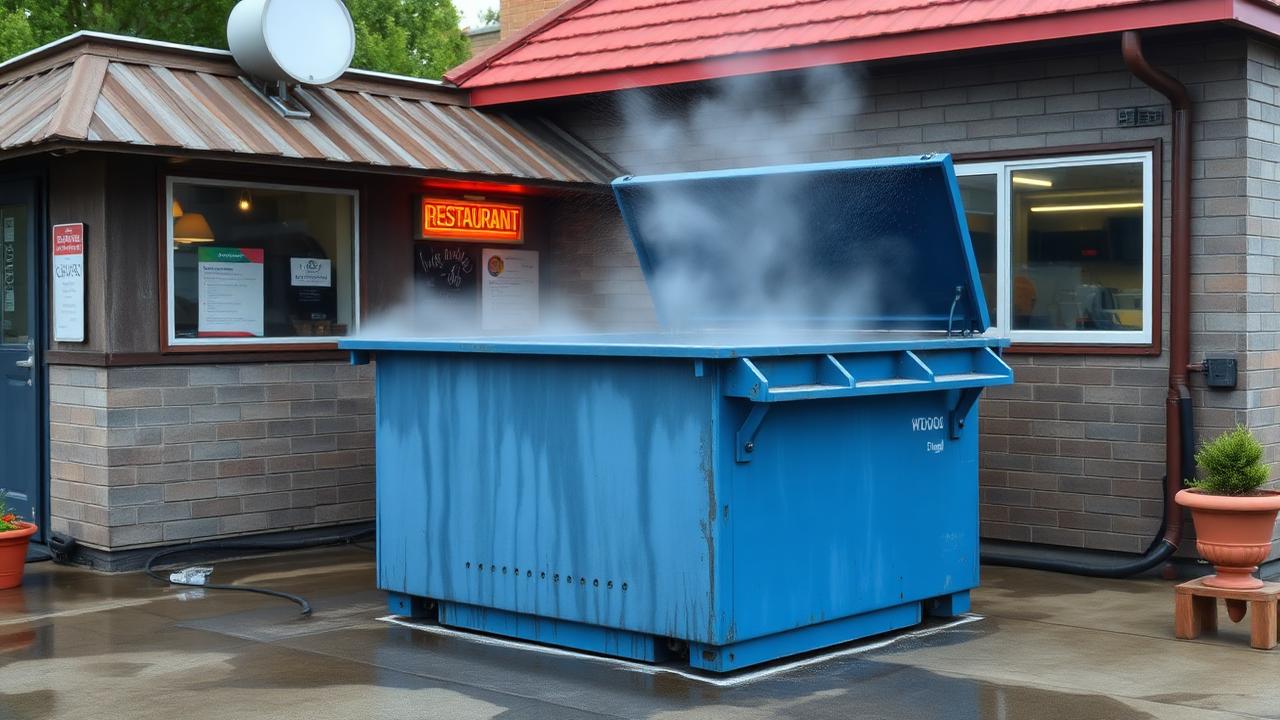
Few areas of a restaurant property attract more complaints — and more health inspector attention — than the dumpster pad and the ground beneath kitchen exhaust fans. In Florida's heat and humidity, grease residue that would take weeks to turn rancid in a cooler climate becomes an odor and pest problem within days. Restaurant owners and shopping center property managers who let these zones slide aren't just risking an unpleasant smell; they're risking code violations, pest infestations, and complaints from neighboring tenants and residents.
Grease trap overflow, food waste runoff, and airborne grease particulate from rooftop or wall-mounted exhaust fans settle onto pavement and building surfaces in a way that ordinary rainfall doesn't wash away. Left untreated, this buildup becomes slippery, attracts flies and rodents, and eventually stains concrete permanently. It also creates real liability: many municipalities and health departments specifically cite dumpster enclosure cleanliness during inspections, and stormwater regulations increasingly hold property owners responsible for grease and food waste reaching storm drains.
This article covers what makes these areas different from standard exterior cleaning, how often Florida restaurants should be scheduling service, and what a compliant cleaning process actually involves.
Why Grease Buildup Is a Florida-Specific Problem
Grease that solidifies quickly in cooler climates stays semi-liquid longer in Florida's heat, which means it spreads further across pavement before setting, seeping into concrete pores and asphalt surfaces more deeply than it would elsewhere. Combined with near-daily afternoon humidity and rain that reactivates old grease without fully removing it, dumpster pads and exhaust areas in Florida develop a persistent, spreading stain pattern that's difficult to address with anything short of hot water and commercial degreasers.
The Dumpster Pad: More Than a Rinse
A proper dumpster pad cleaning addresses three layers of contamination: surface grease and food residue, grease that has penetrated the concrete, and organic buildup inside the enclosure walls and gates where splash-back accumulates. A quick hose-down handles none of these; it typically just spreads grease into cleaner areas of the pad.
Our process for dumpster pads involves a hot water application with a degreaser matched to grease type, dwell time to let the chemical break the bond between grease and concrete, and then controlled rinsing that directs wastewater appropriately rather than letting it run into a storm drain or adjacent lot — an important distinction, since many Florida jurisdictions prohibit discharging wash water containing grease or food waste directly into storm systems.
Signs a Dumpster Pad Needs Service
- Visible dark staining extending beyond the enclosure footprint
- Persistent odor even when the dumpster itself was recently emptied
- Fly or pest activity around the enclosure during daylight hours
- Slick or slippery pad surface, especially after light rain
Kitchen Exhaust Areas: Grease You Can't See From the Ground
Rooftop and wall-mounted kitchen exhaust fans expel grease-laden air continuously during service hours, and that grease settles on the roof surface, exterior walls below the exhaust outlet, and any pavement directly underneath. Over months, this creates a dark, tacky film that's often mistaken for general grime but is actually accumulated cooking grease — a fire and slip hazard in its own right, in addition to being unsightly.
Cleaning this area requires attention to the roof surface (handled carefully to avoid membrane damage, similar to the surface-specific approach in our roof cleaning process), the exterior wall beneath the outlet, and the ground level pavement where drip-off collects.
| Contamination Point | Common Mistake | Correct Approach |
|---|---|---|
| Dumpster pad surface | Standard pressure wash with plain water | Hot water + degreaser with proper dwell time |
| Enclosure walls/gates | Ignored entirely | Scrub and rinse with same degreaser pass |
| Ground below exhaust vent | Treated as general pavement | Targeted degreasing matched to grease buildup |
| Wastewater discharge | Allowed to flow into storm drain | Contained/directed per local discharge rules |
Compliance and Inspection Considerations
Florida health inspectors routinely evaluate dumpster enclosure condition as part of broader sanitation reviews, and repeat citations can affect a restaurant's public inspection score. Beyond health inspections, many municipal stormwater ordinances treat grease and food waste discharge into storm drains as a pollution violation, which means an improperly performed cleaning — one that just pushes grease into a drain — can create liability rather than resolve it. Using a contractor who understands proper wastewater handling protects the tenant and the property owner alike.
Setting a Cleaning Frequency
Restaurants generating heavy grease volume (fryers, char-grills, high dumpster turnover) generally need dumpster pad and exhaust-area cleaning monthly, while lower-volume operations can often maintain acceptable conditions on a bi-monthly or quarterly schedule. Shopping centers with multiple restaurant tenants often find it efficient to standardize a shared schedule across all food-service units, coordinating through their commercial maintenance contract.
Frequently Asked Questions
How often should a restaurant dumpster pad be cleaned?
Most Florida restaurants benefit from monthly cleaning, especially those with high food volume or fryer/grill operations; lower-volume operations may be able to stretch to a bi-monthly schedule.
Is it legal to hose grease into a storm drain?
No. Most Florida municipalities prohibit discharging grease, food waste, or degreaser runoff directly into storm drains, which is why proper containment and directed rinsing during cleaning matters.
Can dumpster pad cleaning help with pest control?
Yes. Removing grease and food residue eliminates a major food source and odor attractant for flies and rodents, making pest control efforts significantly more effective.
Does exhaust area cleaning include the roof itself?
It can. Grease from exhaust outlets often settles on roof surfaces near the vent, and we assess whether roof-level cleaning is needed alongside ground-level and wall cleaning during the same visit.
Keep your dumpster enclosure and exhaust areas compliant, odor-free, and pest-resistant — request a free quote from Power Washing and More! for a customized restaurant maintenance schedule.