Eco-Friendly Detergents and Plant Protection During Exterior Washing
Anyone who has seen a once-green lawn turn brown and patchy a few days after a pressure washing job has witnessed what happens when chemical runoff isn't managed correctly. It's one of the most common complaints homeowners have after a cleaning service, and it's almost entirely preventable with the right detergent choices and pre-job protection steps.
Florida's landscaping — St. Augustine grass, tropical shrubs, flowering plants, and mature trees close to driveways and building foundations — is more sensitive to chemical exposure than people often assume, especially in the concentrated runoff that occurs during roof or house washing.
What Makes a Detergent "Eco-Friendly" in This Context
The term gets used loosely in marketing, so it's worth being specific about what actually matters for exterior cleaning chemicals:
- Biodegradability: breaks down into non-toxic components rather than persisting in soil or waterways
- Phosphate-free formulation: reduces the risk of nutrient runoff contributing to algae blooms in nearby canals or lakes
- Plant-safe dilution ratios: even biodegradable chemicals can harm plants at high concentration, so proper mixing matters as much as the product itself
- Low-VOC composition: reduces air quality impact during application, particularly relevant near enclosed patios or occupied homes
Sodium hypochlorite (a bleach-based solution) remains one of the most effective treatments against algae, mold, and mildew on roofs and siding, and it can be used responsibly when diluted correctly, applied with controlled equipment, and rinsed thoroughly. The "eco-friendly" conversation isn't necessarily about avoiding bleach entirely — it's about concentration control, application method, and runoff management.
Pre-Job Plant Protection Steps
A responsible crew treats landscaping protection as a standard part of the job, not an optional extra:
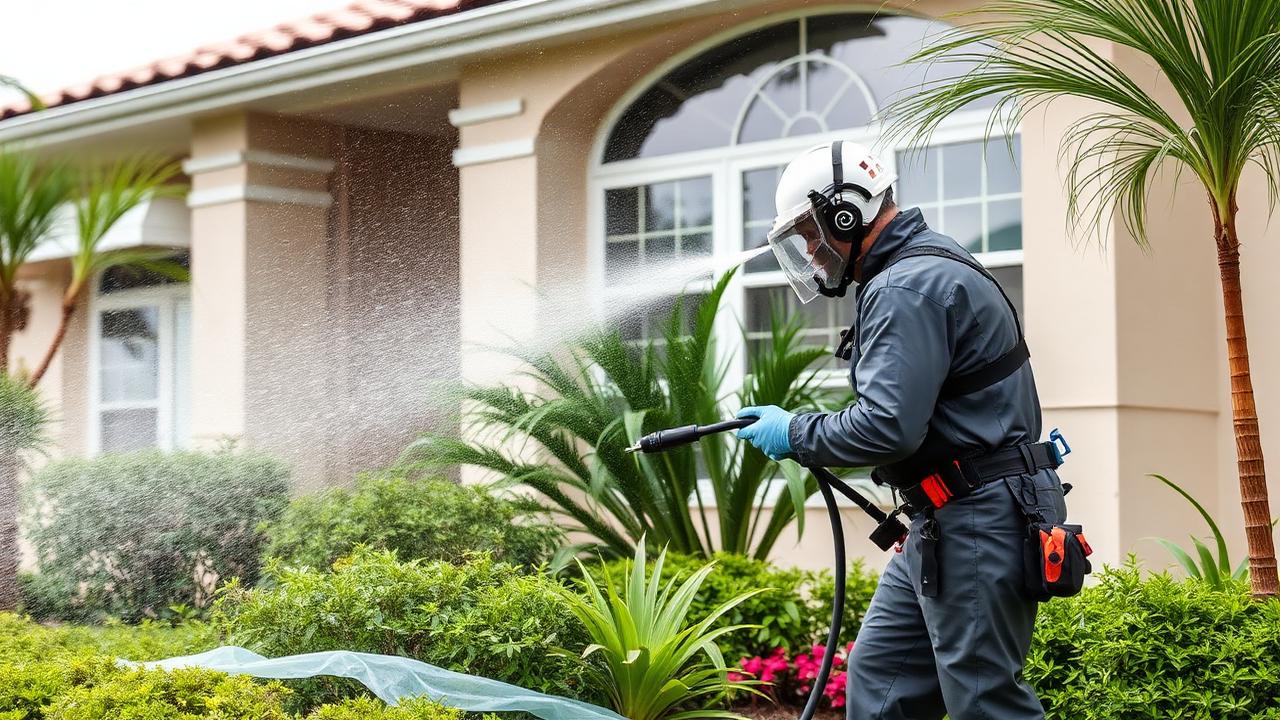
- Pre-wetting — soaking plants, mulch beds, and grass near the work area with plain water before chemical application dilutes any incidental overspray and reduces absorption.
- Covering sensitive plants — plastic sheeting or tarps over flower beds and shrubs directly beneath roof edges or gutters catches runoff before it reaches soil.
- Post-job rinsing — thoroughly rinsing landscaping with fresh water after the job neutralizes any residual chemical that reached foliage or soil.
- Timing around irrigation — avoiding chemical application right before scheduled irrigation cycles prevents unintended dilution or spread into unintended areas.
Comparing Approaches
| Practice | Lower-Risk Approach | Higher-Risk Approach |
|---|---|---|
| Pre-wetting plants | Standard before any chemical use | Skipped to save time |
| Detergent dilution | Measured mixing ratios | "Eyeballed" concentration |
| Covering flower beds | Tarps/plastic under drip lines | No coverage |
| Post-rinse | Full rinse of all landscaping | Rinse only the treated surface |
| Runoff direction | Diverted from storm drains/canals | Allowed to flow freely |
Why This Matters More for Roof and Building Washing
Roof cleaning generates the most runoff exposure risk because chemical solution flows down the entire roofline and drips directly onto foundation plantings below. Our roof cleaning process includes pre-wetting and rinsing landscaping as a standard step specifically because of this runoff path. Similarly, building washing on commercial properties with extensive perimeter landscaping requires the same attention, particularly near HOA common areas where dead grass or damaged shrubs become a visible, shared complaint.
What You Can Ask Before Booking
If you have landscaping you're protective of — mature plants, a recently installed lawn, or ornamental shrubs — ask your contractor directly whether they pre-wet and cover plants, what detergent they use, and whether they rinse landscaping afterward as a standard practice rather than an upsell. A company that treats this as routine, not an extra charge, is the one you want.
Frequently Asked Questions
Will pressure washing chemicals kill my grass?
They can, if applied at high concentration without pre-wetting or post-rinsing. Properly diluted and rinsed applications typically cause no lasting harm, though very sensitive grass types may show temporary yellowing that recovers within a couple of weeks.
Is bleach-based detergent actually eco-friendly?
Sodium hypochlorite breaks down relatively quickly and is effective against algae and mold, but "eco-friendly" here refers more to proper dilution, application, and runoff control than to avoiding the chemical entirely. Non-bleach alternatives exist but are sometimes less effective against stubborn algae growth.
Should I water my plants before a scheduled pressure washing appointment?
It's not necessary — the crew handling the job should pre-wet plants as part of their process, but letting them know about specific sensitive plants beforehand never hurts.
Do eco-friendly detergents cost more?
Some specialty low-impact detergents cost more per gallon than standard bleach-based solutions, but the difference in your final invoice is usually minor since detergent is a small fraction of overall job cost.
Protecting your landscaping while still getting a thorough clean is entirely possible with the right process. Request a free quote from Power Washing and More! and ask us about our plant protection steps for your property.