
Grease Removal From Commercial Concrete: Hot Water and Degreasers
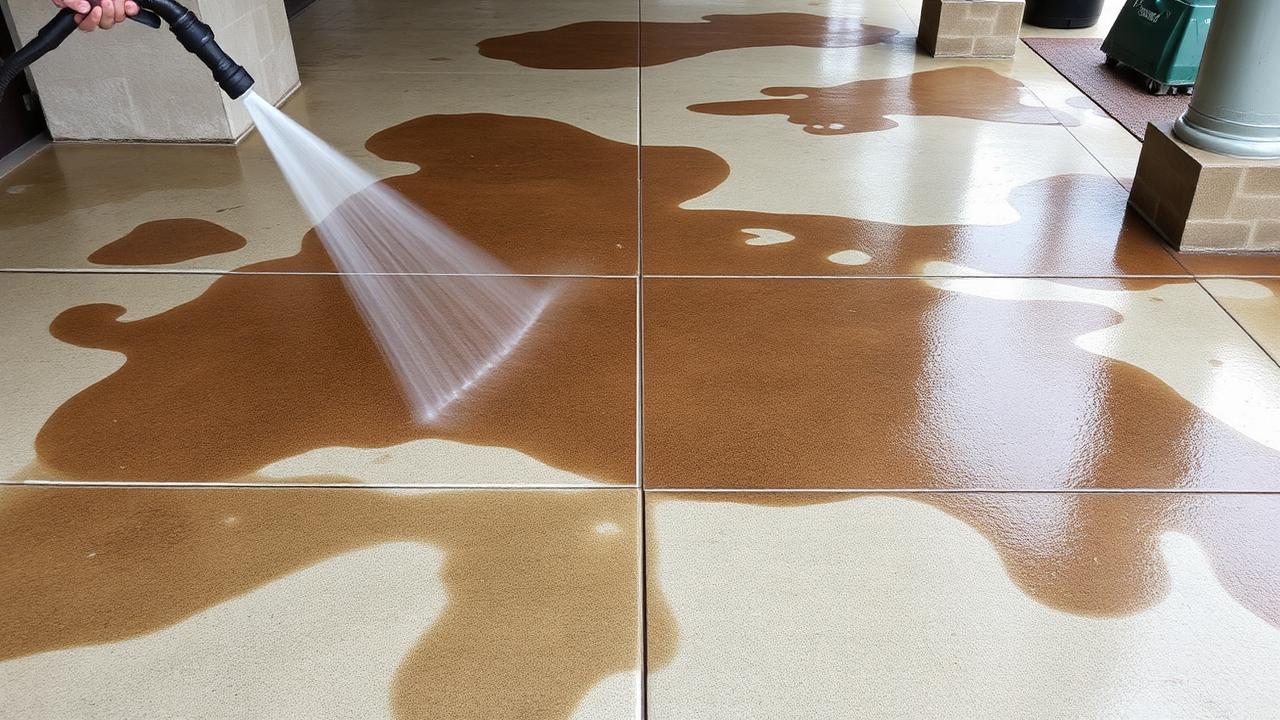
Grease is unlike almost any other stain a commercial property manager deals with. Unlike dirt or organic growth, grease bonds chemically with concrete's porous surface, and Florida's heat only accelerates that bond by keeping the grease semi-liquid and pushing it deeper into the slab before it fully hardens. By the time a stain is visible to the naked eye, it has usually already penetrated well below the surface — which is why a standard cold-water pressure wash so often fails to make a visible difference.
Loading docks, drive-thru lanes, auto service bays, warehouse floors, and restaurant back-of-house areas are the most common grease-affected zones we service across South Florida. Each has a slightly different grease composition — motor oil versus cooking oil versus hydraulic fluid — and each responds best to a specific combination of water temperature, degreaser chemistry, and dwell time. Understanding that combination is the difference between a contractor who leaves a lighter shadow and one who restores the concrete close to its original color.
Why Cold Water Pressure Washing Falls Short on Grease
Water pressure physically dislodges loose material, but grease isn't loose — it's absorbed into the concrete's capillary structure. Cold water pressure, even at high PSI, tends to push grease around or spread it to a wider area rather than lifting it out, because the grease stays semi-solid and doesn't emulsify without heat and the right surfactant.
Hot water changes the chemistry. Heat lowers the viscosity of oil and grease, allowing it to separate from the concrete surface and mix with a degreasing agent so it can be rinsed away rather than redistributed. This is why professional-grade equipment for commercial grease removal is almost always hot-water rated, typically in the 180-230°F range at the surface.
Matching Degreaser Chemistry to Grease Type
Not all grease is chemically the same, and using a generic degreaser on the wrong type often means more passes, more time, and a less complete result.
| Grease Source | Typical Composition | Best-Suited Approach |
|---|---|---|
| Restaurant kitchen/fryer oil | Vegetable/animal fat, breaks down with heat and alkaline degreaser | Hot water + citrus or alkaline degreaser, extended dwell |
| Automotive motor oil | Petroleum-based, resists water alone | Solvent-based or heavy-duty alkaline degreaser + hot water |
| Hydraulic fluid | Petroleum-based, often deeply set from equipment leaks | Industrial degreaser, longer dwell time, possible repeat treatment |
| Loading dock diesel/fuel spills | Petroleum-based, often fresh and less penetrated | Standard degreaser, hot water rinse usually sufficient |
The Dwell Time Factor Most DIY Attempts Skip
Applying degreaser and immediately blasting it off with a pressure washer is one of the most common mistakes we see when a property has attempted grease removal in-house before calling a professional. Degreasers need dwell time — typically 5 to 15 minutes depending on concentration and grease age — to chemically break the bond between grease and concrete. Rinsing too early leaves most of the grease in place, and repeated cold-rinse attempts can actually push contaminated water into the surrounding, previously clean concrete.
Staged Approach for Heavy, Long-Set Stains
Grease stains that have been sitting for months or years, common on loading docks and older auto service bays, often need a staged approach rather than a single pass:
- Initial degreaser application with extended dwell time to soften the deepest-set grease
- Hot water pressure wash to lift and rinse the loosened material
- Assessment of remaining shadow staining
- A second, more concentrated treatment on remaining problem spots if needed
Setting the right expectation matters here — very old, deeply penetrated grease stains may lighten dramatically but not disappear completely, since some staining becomes a permanent part of the concrete's surface color over years of exposure.
Preventing Grease From Re-Penetrating After Cleaning
For high-traffic grease zones like loading docks and service bays, a concrete sealer applied after cleaning gives the surface a protective barrier that makes future spills easier to wipe up before they penetrate, extending the interval between deep cleanings. This is a similar principle to how sealing protects pavers from staining, applied to broom-finished or stamped concrete.
Why Hot Water Equipment Matters for Contractor Selection
Not every pressure washing company carries hot water equipment — it's a larger, more expensive investment than standard cold-water units — which means some contractors quoting "grease removal" are actually only offering cold-water pressure washing with a store-bought degreaser. For commercial-grade grease removal, confirming a contractor uses truck-mounted hot water systems is worth asking about directly before booking.
Frequently Asked Questions
Can grease stains on concrete be completely removed?
Fresh to moderately-aged grease stains often come out close to fully. Very old, deeply penetrated stains may lighten significantly but leave a faint shadow, since some staining becomes permanent over years.
Is hot water pressure washing necessary, or will cold water eventually work?
Cold water can remove very light, fresh grease with enough degreaser and effort, but for set-in commercial grease, hot water is significantly more effective and typically required for a real result.
How often should loading docks and service bays get degreased?
High-use loading docks and auto service areas typically benefit from quarterly degreasing, while lighter-use areas can often go on a semi-annual schedule.
Will degreasing damage concrete or nearby landscaping?
Professional-grade degreasers used with proper dilution and rinsing are safe for concrete and, when applied correctly with runoff control, pose minimal risk to nearby landscaping. Improper dilution or discharge into planting beds is the primary risk, which is why professional application matters.
Stubborn grease stains dragging down your property's appearance? Get a free quote from Power Washing and More! and we'll match the right hot water and degreasing approach to your specific concrete.