Licensed and Insured Pressure Washing: Why It Actually Matters
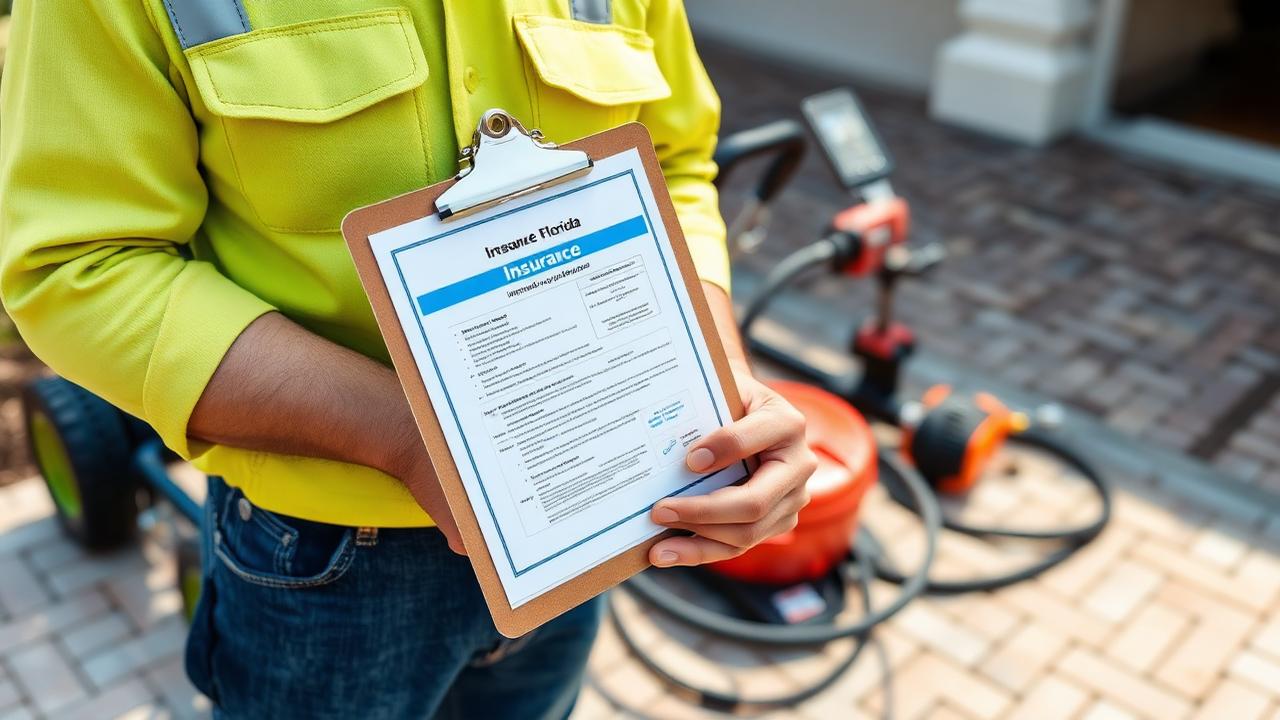
"Licensed and insured" gets printed on nearly every pressure washing truck and flyer in South Florida, but few homeowners actually stop to ask what that phrase means in practice or why it should influence who they hire. It's not just marketing language — it's the difference between a contractor who can absorb the risk of a job gone wrong and one who leaves you holding the bill.
Exterior cleaning looks simple from the outside: point a wand, spray water, surfaces get clean. In reality, it involves pressurized equipment capable of over 3,000 PSI, chemical treatments, ladder work on roofs and multi-story buildings, and constant contact with electrical fixtures, windows, and landscaping. Every one of those elements carries risk, and insurance is what stands between an accident and a lawsuit landing on your property.
What "Insured" Actually Covers
General liability insurance covers property damage caused by the contractor's work — a cracked window, an etched paver, a chemical stain on your lawn, or a dented gutter. Workers' compensation, separately, covers injury to the workers themselves. Both matter, but for different reasons.
If a worker without workers' comp coverage is injured falling off a ladder at your house, Florida law in many circumstances could expose the homeowner to liability, especially if the work was substantial enough to resemble a construction activity. Commercial property owners face even more exposure, since general liability audits and certificate requests are standard practice for building washing, parking garage cleaning, and fleet washing contracts.
Licensing Realities in Florida
Florida does not require a dedicated statewide "pressure washing license" the way it does for roofing, electrical, or general contracting trades. This creates a low barrier to entry — anyone with a truck-mounted rig can start advertising services. Some counties and municipalities require local business tax receipts or registration, and homeowners associations sometimes require proof of insurance before allowing a contractor on the property.
The practical takeaway: since there's no single license number to check the way you would with a roofer, insurance and business registration become the primary way to evaluate legitimacy. Ask for:
| Document | What It Confirms |
|---|---|
| Certificate of General Liability Insurance | Coverage for property damage during the job |
| Certificate of Workers' Compensation | Coverage for on-site worker injury |
| Local Business Tax Receipt | Registered, operating business in your jurisdiction |
| W-9 or Business EIN | Legitimate business entity, not a cash-only side operation |
Why This Matters More for Commercial Properties
Commercial clients — property managers, HOAs, retail plazas, warehouses — have more at stake. A slip-and-fall on a freshly washed parking garage floor, a damaged fleet vehicle from incorrect chemical use, or a building washing job that streaks a storefront window can turn into a costly dispute. Serious commercial contractors carry higher liability limits and are accustomed to providing certificates of insurance naming the property owner as an additional insured. If you manage a commercial site, our commercial services page outlines the scope of insured work we handle, from parking structures to multi-tenant buildings.
The Cost Difference Is Usually Smaller Than People Expect
There's a common assumption that insured, established companies charge dramatically more than uninsured operators. In reality, the gap is often modest once you account for the corners an uninsured operator has to cut elsewhere — cheaper chemicals, rushed labor, no callback guarantee. The real cost difference shows up only when something goes wrong, and by then it's too late to negotiate.
How to Verify Coverage Without Just Taking Their Word for It
Ask the company to email you the certificate of insurance directly from their insurance broker or provider, not a photo of a document that could be outdated or altered. Legitimate companies handle this request routinely, often within the same day, because commercial clients ask for it constantly.
Frequently Asked Questions
Is pressure washing considered a licensed trade in Florida?
There isn't a dedicated statewide pressure washing license comparable to roofing or electrical trades. Some local jurisdictions require business tax registration, and insurance remains the primary credential to verify.
What happens if an uninsured pressure washing company damages my property?
Without insurance, you would likely need to pursue the individual or company directly for reimbursement, which can be difficult if they're a small or informal operation. This is why confirming insurance before work begins is far easier than resolving a dispute afterward.
Do HOAs and commercial properties require proof of insurance?
Many do, especially for common-area work like building washing or parking lot cleaning. Property managers typically request a certificate naming the association or ownership entity as an additional insured.
Should I ask for insurance proof even for a small residential job like a driveway?
Yes. Even a small job involves ladders, chemicals, or equipment that could cause damage. The size of the job doesn't eliminate the value of confirming coverage first.
Power Washing and More! carries the insurance coverage residential and commercial clients expect, and we're glad to provide documentation before you commit. Request a free quote and ask us any questions about our coverage along the way.