
Removing Red Clay and Irrigation Stains From Florida Walkways
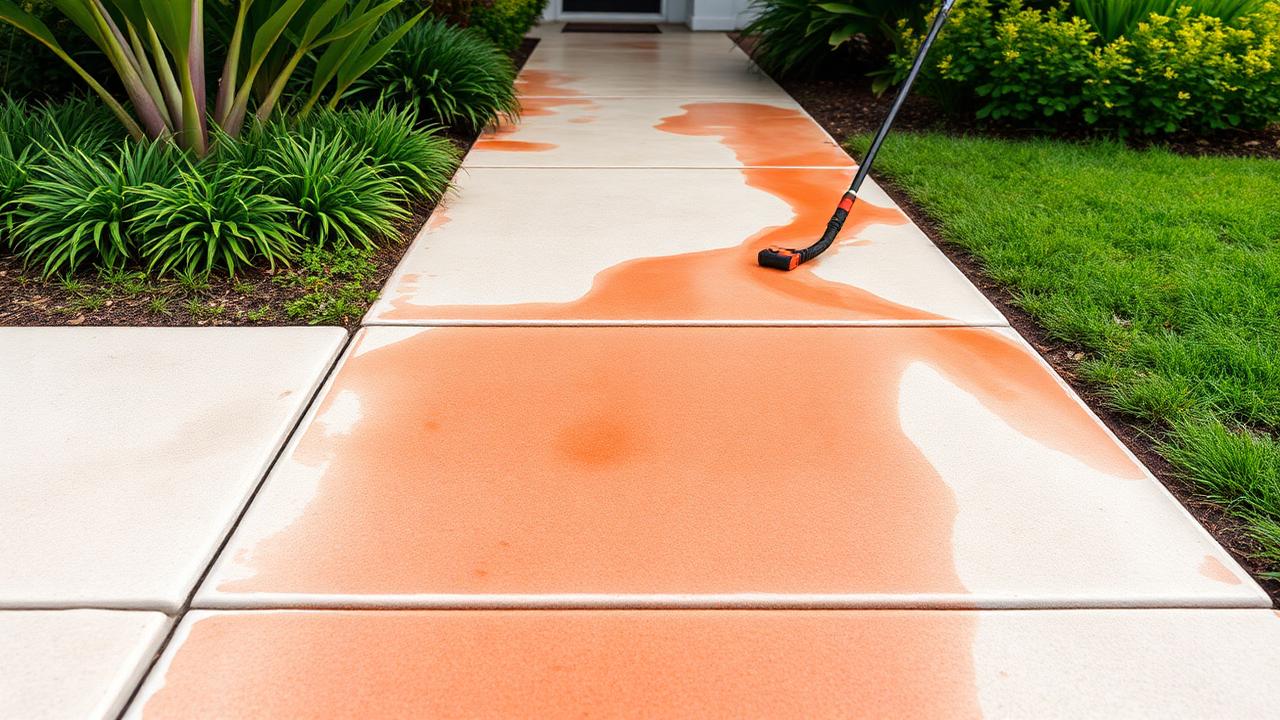
Walkways throughout South Florida often develop a reddish-orange or rust-toned discoloration that has nothing to do with actual rust. In many neighborhoods, the culprit is red clay-based landscaping mulch or fill material tracked onto walkways by foot traffic, lawn equipment, and heavy rain runoff from nearby garden beds. Combined with mineral-heavy irrigation water, these stains can become deeply set into concrete and paver walkways within a single rainy season.
Homeowners often try to scrub these stains away with household cleaners, only to find the discoloration fades slightly and then reappears within weeks. That's because surface scrubbing addresses only what's visible, while the staining agents have already worked into the porous texture of the concrete or paver joints below.
This article looks at where these stains come from, how they differ from other common Florida concrete stains, and the cleaning approach that actually removes them for good.
Identifying Red Clay Versus Rust Stains
Red clay staining tends to appear as a diffuse, somewhat uneven discoloration that follows foot traffic patterns or the edges of garden beds and mulched areas, rather than the tight, spray-shaped patterns typical of sprinkler-caused rust stains. It's also common near driveways and walkways bordering landscaping that uses red mulch or where the underlying soil itself has a natural reddish tint, as is common in parts of inland South Florida.
Because both types of staining share a similar reddish-orange color, it's easy to misidentify one for the other, which can lead to using the wrong cleaning product and getting disappointing results.
Why Irrigation Water Makes Clay Staining Worse
Irrigation water, especially from wells with higher mineral content, doesn't just deposit its own iron onto concrete, it also helps dissolve and spread red clay particles that have already settled onto a walkway. Each watering cycle can push clay sediment further into porous joints and surface texture, making the stain progressively harder to remove the longer it's left untreated.
Where This Is Most Common
| Walkway Location | Staining Risk | Notes |
|---|---|---|
| Adjacent to mulched garden beds | High | Clay/mulch washes onto path edges |
| Near well-fed irrigation heads | High | Mineral content accelerates staining |
| Shaded, slow-drying areas | Moderate | Stains set longer before drying |
| Open, sun-exposed walkways | Lower | Faster drying reduces stain penetration |
The Cleaning Process for Set-In Clay Stains
Removing red clay staining generally starts with a pressure washing pass to lift loose surface material, followed by application of a cleaning solution designed to break down mineral and organic staining agents bonded to the concrete. Because clay particles can settle deep into paver joints, joint areas often require additional attention or a longer solution dwell time compared to the flat, smooth sections of the walkway.
In more severe cases where staining has set for a long period, more than one treatment cycle may be needed to fully restore the walkway's original color without resorting to abrasive scrubbing that can wear down the concrete surface itself.
Preventing Recurrence After Cleaning
Installing a small barrier, such as edging or a slight grade change, between mulched beds and walkways helps prevent clay and mulch material from washing onto the path during heavy rain. Redirecting or adjusting irrigation heads so they don't spray directly across walkway surfaces also reduces the amount of mineral-laden water contributing to future staining.
For walkways that see recurring issues, sealing after a full cleaning creates a less porous surface that resists both clay penetration and future staining, similar to the protective benefits sealing provides on paver surfaces elsewhere on the property.
When to Call a Professional Versus DIY
Fresh, light discoloration from recent rain events can sometimes be improved with a simple rinse and scrub using a stiff outdoor brush. However, walkways with staining that has been building for a full season or longer typically need professional-grade cleaning agents and equipment to fully lift the color without damaging the surface, particularly on stamped or colored concrete where aggressive scrubbing risks removing surface finish along with the stain.
Frequently Asked Questions
Is red clay staining permanent?
Not usually. With the right cleaning solution and adequate dwell time, most red clay staining can be substantially removed, even when it has been present for a long time.
Will bleach remove red clay stains?
Bleach is generally ineffective against mineral-based clay staining and can also discolor certain paver and concrete finishes, so it's not typically recommended for this specific stain type.
How can I stop clay stains from coming back?
Adding edging between mulched beds and walkways, adjusting irrigation spray patterns, and sealing the walkway after cleaning are the most effective long-term prevention steps.
Does this staining affect paver walkways differently than concrete?
Yes, paver joints tend to trap clay particles more than a smooth concrete surface, often requiring extra attention to fully clean the joint material during treatment.
Reading the Stain to Identify the Cause
Not every reddish-brown mark on a walkway is the same. Red clay tracked in from landscaping beds tends to sit more on the surface and lift with a strong cleaning solution and moderate pressure. Iron-heavy irrigation stains, by contrast, often bloom outward from a sprinkler head in a fan or ring pattern and penetrate deeper into the concrete's pores, requiring a rust-targeted treatment rather than a general degreaser or algae cleaner.
Coordinating With Landscaping and Irrigation
Because these stains are tied directly to landscaping choices and sprinkler placement, a lasting fix usually involves more than cleaning. Redirecting heads away from hardscape, switching to mulch or gravel borders instead of exposed red clay soil near walkways, and flushing irrigation lines periodically all reduce how quickly new stains reappear after a professional cleaning.
If red clay or irrigation stains have taken hold of your walkways, Power Washing and More! offers professional concrete cleaning throughout South Florida to restore your hardscape. Visit our services page or request a free quote to get started.