
Storefront and Awning Cleaning: Small Detail, Big Revenue Impact
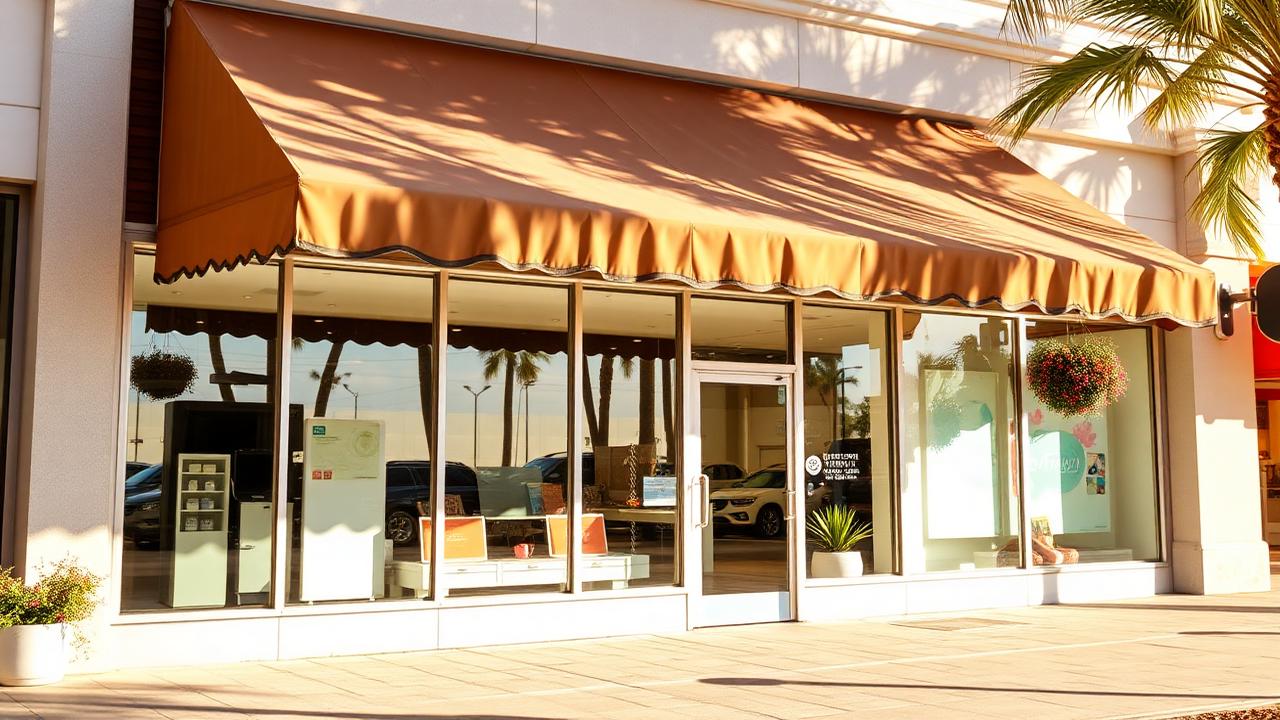
Retail leasing consultants will tell you the same thing commercial real estate data backs up: a clean, well-lit storefront directly influences whether a passerby walks in. It's one of the few pieces of marketing a tenant doesn't have to design or pay an agency for — just maintain. Yet storefront glass, awnings, and entryway surfaces are routinely the most neglected exterior element at shopping centers, often because they fall into a gap between the tenant's interior cleaning crew and the property's landscaping or general maintenance contractor.
In Florida, that neglect shows faster than almost anywhere else. Salt air along the coast leaves a hazy film on glass within weeks, pollen and dust cling to fabric and vinyl awnings during dry stretches, and mold takes hold on shaded awning surfaces during the humid rainy season. A storefront that looked sharp at lease signing can look tired within a single season without a deliberate cleaning plan.
The Revenue Case for Clean Storefronts
Retail is a visual business, and window displays only work if the glass they're behind is clear. Hazy, streaked, or water-spotted storefront glass diffuses light and muddies the very displays a tenant is paying to merchandise, undercutting marketing spend the retailer has already made. For restaurants, a clean, inviting entrance and patio awning is often the deciding factor for a customer choosing between two similar options on the same block.
Shopping center owners and property managers who invest in a coordinated storefront cleaning program aren't just maintaining appearance — they're protecting the leasing value of the center itself, since prospective tenants and their brokers evaluate a center's overall presentation during site visits.
Glass: Getting Past Water Spots and Salt Film
Standard glass cleaning with a squeegee handles daily fingerprints and dust, but the mineral deposits from hard water and salt air require a different approach. Left untreated, these deposits etch into glass over time, becoming permanently visible even after cleaning. A proper storefront glass service uses a pH-balanced cleaning solution and, for established mineral buildup, a mild acidic treatment specifically formulated for glass to dissolve deposits without scratching.
Frequency Guidance for Coastal vs. Inland Storefronts
- Storefronts within a mile of the coast: every 2-4 weeks due to salt air film
- Inland retail centers: monthly to bi-monthly depending on traffic and dust exposure
- High-visibility flagship or anchor storefronts: weekly detailing often justified by foot traffic value
Awnings: Fabric, Vinyl, and the Mold Problem
Florida's humidity makes awning cleaning a mold-and-mildew issue as much as a dirt issue. Fabric awnings in particular can develop black mold spotting on the underside within a single rainy season if airflow is limited, and once mold takes hold in fabric weave, it's considerably harder to fully remove than surface dirt.
Vinyl and aluminum awnings are more forgiving but still accumulate a chalky, UV-degraded film over time that dulls branding colors and signage. Cleaning method depends heavily on material:
| Awning Material | Common Issue in Florida | Cleaning Approach |
|---|---|---|
| Fabric (canvas/acrylic) | Mold/mildew spotting, especially underside | Soft wash with mildewcide-treated solution, gentle rinse |
| Vinyl | UV chalking, dulled color | Low-pressure wash with mild detergent |
| Aluminum/metal frame | Oxidation staining, streaking at seams | Detail wash, oxidation-specific cleaner if needed |
The same low-pressure, chemistry-led soft washing approach we use on roofs and siding applies directly to awning fabric, since high pressure can tear seams or drive water into stitching, accelerating the exact mold problem the cleaning is meant to solve.
Coordinating Storefront Cleaning Across a Multi-Tenant Center
One of the most common gaps at shopping centers is inconsistency — one tenant hires their own window cleaner, another does nothing, and the difference is visually obvious walking down the row. Property managers who build storefront and awning cleaning into the common area maintenance (CAM) budget and apply it uniformly across all tenants present a more cohesive, professional center overall, and often get better pricing through a single scheduled contract than tenants would individually.
This pairs naturally with broader exterior upkeep like the building surface cleaning covered in our building washing service, letting a single visit address glass, awnings, and adjacent wall surfaces together.
Frequently Asked Questions
How often should storefront glass be cleaned in Florida?
Coastal storefronts benefit from cleaning every two to four weeks due to salt air film, while inland locations can often go monthly or bi-monthly depending on traffic and dust levels.
Can mold be fully removed from fabric awnings?
Mold on the surface can typically be fully removed with a proper mildewcide treatment and soft washing. Mold that has deeply penetrated the fabric weave over a long period may leave faint shadowing even after treatment.
Is high-pressure washing safe for awnings?
Generally no. High pressure can tear fabric seams, drive water into stitching, and dent or streak metal framing. A low-pressure, chemistry-based soft wash approach is safer and more effective.
Should awning and storefront cleaning be part of a center's CAM budget?
Many property managers find it more efficient and visually consistent to include it in CAM-funded common maintenance rather than leaving it to individual tenants, ensuring uniform appearance across the property.
Give your storefronts and awnings the clean, inviting look that draws customers in — request a free quote from Power Washing and More! for your retail center or restaurant property.