Surface Cleaner vs Wand: Why Your Concrete Has Stripes
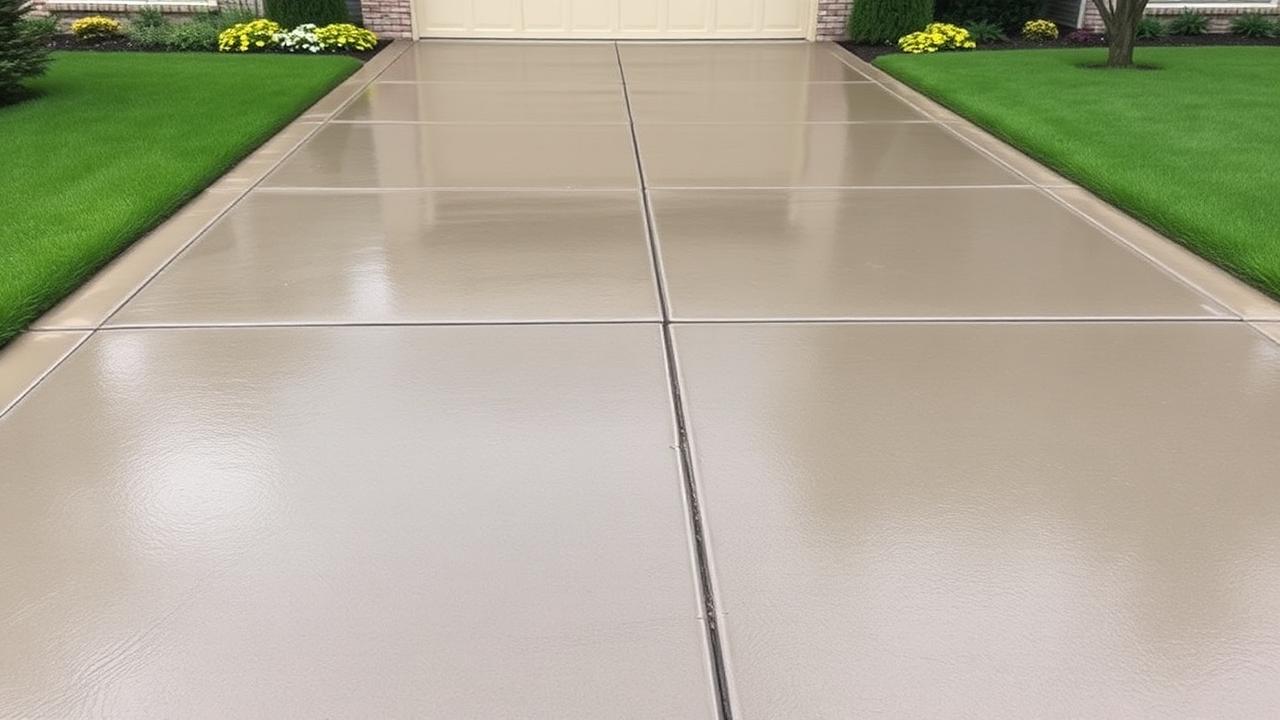
If you've ever pressure washed your own driveway with a standard wand attachment, you've probably noticed the result: overlapping streaks, or "zebra striping," where some passes look clean and others look untouched, even though you swore you covered the whole surface evenly. This isn't a sign you did something wrong exactly — it's a sign you used the wrong tool for the job.
Understanding the difference between a surface cleaner and a wand explains not just why your driveway has stripes, but why professional results on large flat surfaces look so much more even than DIY attempts.
What a Wand Actually Does
A pressure washer wand is a single, narrow, concentrated stream of water. It's precise and powerful, which makes it ideal for spot-treating stains, cleaning vertical surfaces, detail work around edges, and reaching tight corners a larger attachment can't access. But that precision is also its weakness on large flat areas: the cleaning happens in a narrow line, and the pressure and dwell time on any given spot depends entirely on how steadily and evenly the operator moves the wand.
Move too fast in one section and too slow in another, and you get exactly what you'd expect — inconsistent cleaning, visible in overlapping streaks once the surface dries. It's less about the equipment failing and more about how difficult it is for a human hand to maintain perfectly even speed and distance across many square feet.
What a Surface Cleaner Does Differently
A surface cleaner is a round, flat attachment with two or more rotating nozzles enclosed under a protective housing. Instead of a single stream, it spins multiple jets in a consistent circular pattern while gliding across the surface like a lawn mower. This produces even, overlapping coverage across the entire width of the attachment, with consistent pressure and dwell time regardless of how fast or slow the operator moves.
The enclosed housing also controls overspray and splashback, which is why surface cleaner attachments are standard equipment for driveways, sidewalks, pool decks, warehouse floors, and parking lots — any large, flat, hard surface where even coverage matters more than pinpoint precision.
Side-by-Side Comparison
| Factor | Wand | Surface Cleaner |
|---|---|---|
| Best for | Edges, corners, vertical surfaces, spot stains | Large flat areas: driveways, patios, parking lots |
| Coverage evenness | Depends on operator technique | Consistently even due to rotating design |
| Speed on large areas | Slower, more labor intensive | Faster coverage per square foot |
| Overspray control | Minimal — open stream | Contained under housing |
| Common result if misused | Zebra striping on concrete | Rarely stripes if used correctly |
| Typical use case | Roof edges, gutters, fences, stairs, siding detail | Concrete, pavers, warehouse floors |
When Both Tools Get Used on the Same Job
Most professional jobs use both: a surface cleaner handles the bulk of a driveway or patio, while a wand cleans the edges along garage doors, landscaping borders, and tight corners the surface cleaner can't reach. If your driveway has visible striping from a previous DIY attempt or a rushed job, a proper surface cleaner pass often corrects it, though very deep striping from repeated uneven treatment sometimes takes an extra pass to fully even out.
Paver surfaces need extra care regardless of tool choice, since either method can dislodge polymeric sand between joints if pressure is too high or held too close in one spot — something to flag if your pavers were recently sealed through a service like our paver sealing program.
Why This Matters When Comparing Quotes
If you're getting quotes for a driveway or patio cleaning, it's fair to ask whether the crew uses a surface cleaner for the main area rather than a wand alone. Wand-only cleaning on a large driveway isn't necessarily wrong, but it takes considerably longer to do evenly and carries higher risk of visible striping if rushed.
Frequently Asked Questions
Can I fix zebra striping on my driveway myself?
Sometimes a surface cleaner pass evens it out, but if the striping is caused by uneven etching of the concrete itself rather than surface dirt, it may be permanent and require resurfacing rather than additional washing.
Is a surface cleaner more expensive to use, and does that affect my quote?
Surface cleaners actually reduce labor time on large areas, which can make jobs more cost-efficient rather than more expensive, despite being specialized equipment.
Do surface cleaners work on pavers?
Yes, but with caution — pressure needs to stay low enough to avoid displacing joint sand, and a wand is often used for detail work at the edges regardless of whether a surface cleaner is used in the middle.
What tool should be used on my roof?
Neither a wand nor a surface cleaner used at pressure washing PSI belongs on most roofs. Roof cleaning uses low-pressure soft washing with a wide-pattern nozzle and chemical treatment rather than mechanical pressure — see our roof cleaning page for details on that process.
If your driveway or patio has visible stripes or uneven cleaning from a previous attempt, request a free quote and we'll assess whether a proper surface cleaner pass will resolve it.