DIY vs Professional Pressure Washing: An Honest Comparison
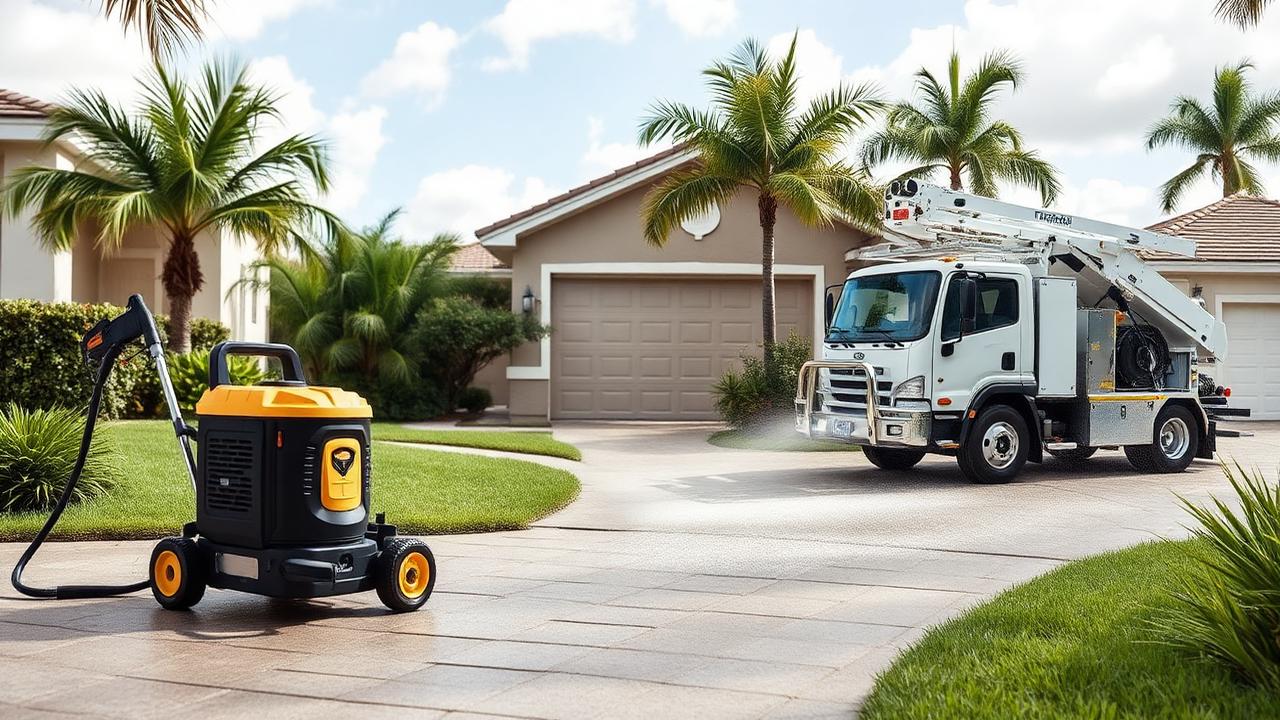
Every hardware store in South Florida sells consumer pressure washers, and it's tempting to rent or buy one for a weekend project instead of paying a contractor. Sometimes that's a perfectly reasonable choice. Other times, it leads to cracked pavers, stripped paint, or a roof that looks worse than before you started. This comparison is meant to be honest about both sides, not a sales pitch dressed up as advice.
Where DIY Genuinely Makes Sense
Small, low-risk jobs are often fine to handle yourself. A patio table, a section of walkway, outdoor furniture, or a small deck with no delicate coating can usually be cleaned safely with a consumer-grade electric or gas pressure washer in the 1,300–2,300 PSI range. If you're comfortable maintaining consistent wand distance and testing pressure on an inconspicuous spot first, the risk of damage on these small, flat, durable surfaces is relatively low.
Renting or buying equipment for a single job costs roughly $50–$100 for a day's rental, or a few hundred dollars to buy a mid-range consumer unit outright if you plan to reuse it seasonally.
Where DIY Gets Risky
Roofs are the clearest example. Standing on a wet, algae-covered tile or shingle roof is dangerous even for experienced professionals with the right harnesses and footwear. Beyond the fall risk, incorrect pressure on shingles strips granules and shortens roof lifespan permanently — there's no undoing it once it's stripped. Roof work should almost always be left to professionals using soft wash roof cleaning methods designed specifically to protect the surface.
Stucco, painted siding, and older wood siding are also higher-risk DIY territory. Consumer pressure washers can force water behind siding panels, leading to hidden moisture damage and mold growth inside walls — a problem that can cost thousands to repair and may not show up for weeks.
Large driveways and paver surfaces present a different challenge: without a surface cleaner attachment, a wand alone creates uneven "striping" and can wash out the sand between pavers, leading to shifting and weed growth. If you're maintaining sealed pavers, incorrect technique can also damage the sealant, which our paver sealing team frequently gets called to fix and reapply.
Side-by-Side Comparison
| Factor | DIY | Professional |
|---|---|---|
| Upfront cost | Lower (rental or purchase) | Higher per job, but no equipment investment |
| Risk of surface damage | Higher without experience | Lower, trained technique |
| Time required | Hours of your own labor | Scheduled, completed by crew |
| Roof and multi-story work | Not recommended — fall risk | Standard equipment and safety practices |
| Insurance if something goes wrong | None — you bear the cost | Contractor's insurance covers damage |
| Chemical treatment for algae roots | Rarely done correctly | Standard practice, longer-lasting results |
| Results longevity | Water-only rinse fades faster | Chemical treatment slows regrowth |
The Chemical Treatment Gap
One of the most overlooked differences is what happens after the rinse. Water alone removes surface dirt and algae but leaves spores and roots behind, meaning growth returns within weeks in Florida's humidity. Professional soft washing and pressure washing services apply a cleaning solution formulated to kill algae and mold at the root, which is why professionally cleaned surfaces typically stay clean for six months to a year longer than a DIY water-only rinse.
A Reasonable Way to Decide
Ask yourself three questions: Is the surface at height or angled (roof, second story)? Is the surface painted, stuccoed, or otherwise coating-sensitive? Do you need the results to last, or is this a one-time touch-up before a party? If you answered yes to either of the first two, hire a professional. If it's a small, flat, durable surface and you're comfortable with basic equipment, DIY is a legitimate option.
Frequently Asked Questions
What PSI is safe for a homeowner to use on concrete?
Most concrete driveways tolerate 3,000–4,000 PSI, but a surface cleaner attachment matters more than raw pressure for avoiding stripe marks — see our explanation of surface cleaners versus wands for more detail.
Can I rent equipment strong enough for a roof?
Technically some rental units reach adequate pressure, but roof cleaning should use low-pressure soft washing, not high PSI, and should account for fall risk and roof material. This is one job where the equipment isn't the limiting factor — safety and technique are.
Will a DIY wash void my roof warranty?
Some shingle and tile manufacturers specify approved cleaning methods in their warranty terms. Using high pressure or the wrong chemical could void coverage, so check your warranty documentation before attempting it yourself.
How much does professional pressure washing typically cost compared to a DIY rental?
A DIY rental might run $50–$100 for a day, while professional pricing depends on square footage and scope — but factor in your own labor time, chemical costs, and damage risk when comparing the two.
If you'd rather skip the guesswork on a specific job, request a free quote from Power Washing and More! and we'll tell you honestly whether it's a reasonable DIY project or one better left to us.